हिंदी सारांश:
- पूर्णाहुति में नारियल का अर्पण अहंकार के समर्पण और सृजन का प्रतीक है, जो यज्ञ को पूर्णता प्रदान करता है।
- नारियल की अनुपस्थिति में, यदि भाव शुद्ध हो और उचित विकल्प उपयोग किए जाएं, तो पूजा अधूरी नहीं मानी जाती।
- नारियल के गूढ़ आध्यात्मिक अर्थ को समझना ही सच्ची पूर्णाहुति के लिए महत्वपूर्ण है।
Namaste, seekers of divine wisdom! As an elite Hindu religious scholar and spiritual travel journalist, I’ve witnessed the profound depths of Vedic rituals across Bharat. Today, as we approach auspicious spiritual cycles, let’s unravel a deeply significant mystery central to our sacred fire ceremonies: the offering of the coconut in Purnahuti during Navami Havan. Is it just a ritual, or does it hold the key to unlocking cosmic blessings? And what if, for some reason, this sacred fruit is unavailable? Does your devotion fall short, your puja incomplete?
Get ready to transcend common perceptions and delve into the heart of Vedic truth, ensuring your upcoming Navami Havan, particularly the climactic Purnahuti, is brimming with authentic spiritual power.
Significance & Vedic Shastric Context
The Purnahuti, literally meaning ‘complete offering’, marks the culmination of any Havan or Yajna. It’s the grand finale, the moment when all accumulated sacred energies are offered back to the divine with utmost devotion. Among the myriad offerings made into the sacred fire, the coconut holds a pre-eminent, almost non-negotiable, position for many. But why?
Transform Your Home’s Energy Today!
Discover the ancient secrets to attracting wealth, health, and harmony. Download our premium 5-chapter Vastu Shastra guide instantly.
From a Vedic perspective, the coconut, or ‘Shriphal’ (fruit of prosperity/God’s fruit), is a microcosm of creation itself. Its hard outer shell represents the physical body or the ego (Ahamkara) that we must break to reach the sweet, pure water within – symbolizing the Atman, the pure consciousness. The three eyes of the coconut are often associated with Lord Shiva’s Trishul or the three gunas (Sattva, Rajas, Tamas) which need to be transcended.
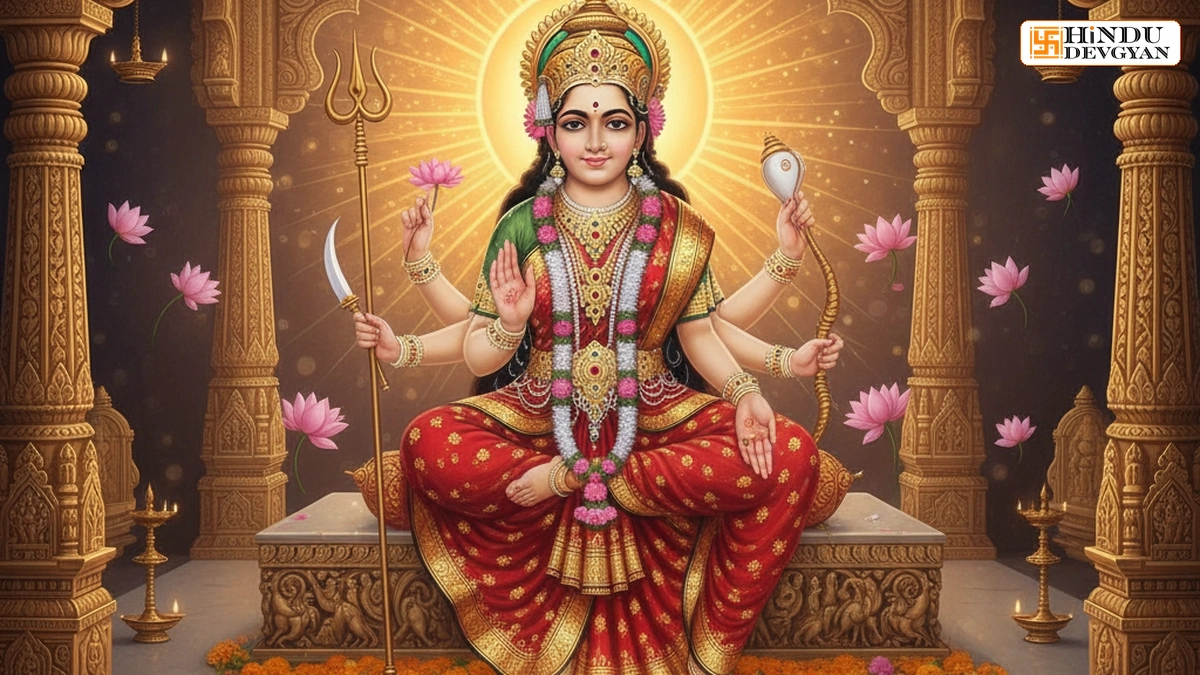
When offered in the Purnahuti, especially during a powerful occasion like Navami Havan (dedicated to the Divine Mother, Durga), the coconut signifies a complete surrender of the self, our ego, and all our material attachments to the divine fire. It’s an act of breaking free from the illusion of individuality, merging our personal consciousness with the universal. This powerful act is believed to please the deities, invoking their complete blessings and fulfilling the purpose of the Yajna.
पत्रं पुष्पं फलं तोयं यो मे भक्त्या प्रयच्छति।
तदहं भक्त्युपहृतमश्नामि प्रयतात्मनः॥
(Bhagavad Gita 9.26)Transliteration: Patraṁ puṣpaṁ phalaṁ toyaṁ yo me bhaktyā prayacchati | tadahaṁ bhaktyupahṛtam aśnāmi prayatātmanaḥ ||
Word-by-word meaning:
Patram: a leaf
Pushpam: a flower
Phalam: a fruit
Toyam: water
Yah: whoever
Me: to Me
Bhaktya: with devotion
Prayachchati: offers
Tat: that
Aham: I
Bhaktya-upahritam: offered with devotion
Ashnami: accept/eat
Prayatatmanah: from the pure-heartedEssence: This profound verse from the Bhagavad Gita beautifully encapsulates the essence of offering. It teaches us that the Divine accepts any offering, be it a simple leaf, flower, fruit (like the coconut), or even water, as long as it is offered with pure devotion from a sincere heart. The *Bhaav* (feeling) behind the offering is paramount.
📲 Join Our WhatsApp Channel
रोज़ सुबह पाएं — पंचांग, मंत्र, और आध्यात्मिक ज्ञान सीधे WhatsApp पर。
Get daily Panchang, Mantras & Spiritual Wisdom every morning.
Step-by-Step Vidhi, Shubh Muhurat & Planetary Influences
Navami Havan is typically performed on the ninth day of Navaratri, a period of immense spiritual potency dedicated to Goddess Durga. While each Navaratri has its specific dates, for those looking ahead, the upcoming **Chaitra Navami in 2027 is expected to fall on Saturday, April 17, 2027.** This day is exceptionally auspicious for Havan and spiritual endeavors.
The general procedure for Navami Havan involves:
- Sankalpa: Taking a vow with pure intention.
- Ganesha Puja: Invoking Lord Ganesha for obstacle removal.
- Navagraha Puja: Appeasing the nine planets.
- Kalash Sthapana & Devi Puja: Establishing the sacred pot and invoking the Divine Mother.
- Agnisthapana: Lighting the sacred fire.
- Ahutis (Offerings): Chanting specific mantras and offering ghee, grains, herbs (samagri) into the fire.
- Purnahuti: The grand final offering. This is where the coconut plays its crucial role.
The Coconut in Purnahuti:
For Purnahuti, a whole, unhusked coconut (with its tuft, ‘shikha’, intact) is typically wrapped in a red cloth, adorned with kumkum and flowers. It is then offered into the intensely burning fire with specific Purnahuti mantras, signifying the complete and final offering to the divine. The sound of the coconut cracking in the fire is considered highly auspicious, symbolizing the breaking of illusions.
Shubh Muhurat for Chaitra Navami Havan 2027:
While specific timings should always be confirmed with a local Panchang, generally, Havan can be performed after sunrise and before sunset on Navami Tithi. On April 17, 2027 (Chaitra Navami), the most auspicious periods for Havan would typically be during Brahma Muhurat (before sunrise) or during the Abhijeet Muhurat (around midday, approx. 11:50 AM to 12:40 PM, though this varies by location). Consulting a knowledgeable priest or your Kundli for personal auspicious timings is always recommended.
Planetary Influences: Navami Tithi itself is governed by the Sun, signifying power, authority, and divine consciousness. Performing Havan on this day, especially for Devi, enhances one’s inner strength, resolve, and dispels negative planetary influences, aligning you with cosmic harmony.
Important Dos & Don’ts to Avoid Shastric Karma Errors
To ensure your Navami Havan yields maximum spiritual benefit and avoids any inadvertent errors, consider these essential guidelines:
- DO offer a whole, unhusked coconut: The coconut should be complete, symbolizing a complete offering of self. Avoid broken or damaged coconuts.
- DO ensure purity: The coconut, like all offerings, should be pure and untouched by impure hands before the ritual.
- DO offer with full devotion (Bhaav): As the Bhagavad Gita emphasizes, the intention and devotion behind the offering are paramount. Mechanical rituals yield little fruit.
- DO understand the symbolism: Meditate on the meaning of surrendering your ego as you offer the coconut. This elevates the ritual to a profound spiritual experience.
- DON’T panic if a coconut is unavailable: This is the crucial myth to dispel! While highly recommended, if a coconut is genuinely unavailable (e.g., due to location or unforeseen circumstances), your puja is NOT necessarily incomplete. The shastras emphasize that pure devotion and the spirit of offering are supreme.
- DON’T offer a ‘dry’ or ‘bad’ coconut: Ensure the coconut is fresh and has water inside, symbolizing life and vitality.
- DON’T perform Purnahuti without proper mantras: Ensure you know or have a priest to recite the correct Purnahuti mantras for full effect.
In cases where a coconut is unavailable, alternatives can be used with sincere devotion, such as a whole betel nut (supari) or even a symbolic fruit representing your complete offering. Remember, the Divine Mother sees the heart, not just the physical offering. For deeper insights into devotional practices and their karmic implications, explore the wisdom shared on Bhagavad Gita Wisdom on HinduDevGyan.
Frequently Asked Questions
-
Why is coconut specifically used for Purnahuti?
The coconut symbolizes the human ego and the universe (Brahmanda). Offering it in Purnahuti signifies the complete surrender of one’s ego and self to the divine fire, seeking liberation and universal consciousness. Its hard shell and nourishing water represent breaking through outer layers to find inner purity. -
Is the Navami Havan incomplete if I don’t offer a coconut in Purnahuti?
While offering a coconut is highly revered and recommended for its profound symbolism, if it’s genuinely unavailable, your Havan is not necessarily incomplete. The purity of your intention (Bhaav), devotion, and sincere prayer are paramount. Alternatives like a whole betel nut (supari) can be offered with the same devotional intent. The Divine accepts offerings made with true love and sincerity, as emphasized in the Bhagavad Gita. -
Should the husk be removed from the coconut before offering it in Purnahuti?
No, for Purnahuti, the coconut should ideally be offered whole, with its husk and ‘shikha’ (tuft) intact. The whole form signifies a complete, unadulterated offering. The husk represents the covering of Maya (illusion), and offering it whole symbolizes surrendering all aspects of existence, including the illusory, to the divine fire.
🔮 Curious About Your Birth Chart?
Discover your exact career path, marriage compatibility, and planetary dashas based on your exact birth time.
⭐ Recommended for You
Contains affiliate links. We earn a small commission at no extra cost to you.
Complete brass thali with diya, incense holder, bell and more for daily puja.