
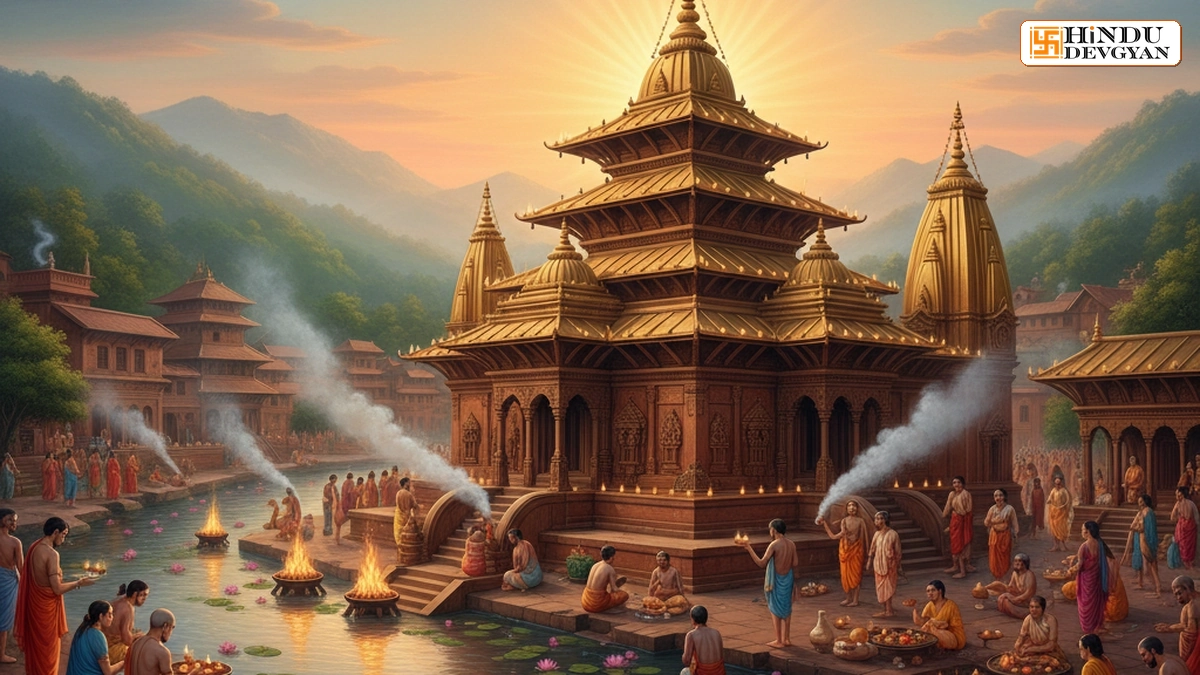
हिंदी सारांश:
- नेपाल, जिसे देव भूमि कहा जाता है, भारत की आध्यात्मिक आस्था के केंद्र में है, विशेषकर पशुपतिनाथ, जनकपुर, और मुक्तिनाथ जैसे पवित्र स्थलों के कारण।
- भारत और नेपाल के बीच का संबंध केवल भौगोलिक नहीं, बल्कि सदियों पुराने सांस्कृतिक आदान-प्रदान और ‘रोटी-बेटी’ जैसे सामाजिक ताने-बाने से भी गहरा जुड़ा है।
- वेदों से लेकर आधुनिक तीर्थयात्राओं तक, नेपाल सनातन धर्म के लिए एक महत्वपूर्ण आध्यात्मिक लंगर के रूप में कार्य करता है, जो भारत की धार्मिक चेतना को पोषित करता है।
As an elite Hindu Religious Scholar, a seasoned Spiritual Travel Journalist, and your Google Discover SEO Editor-in-Chief, I invite you on an extraordinary journey. Today, as we stand on Wednesday, 25 November 2026, the spiritual currents of the Himalayas beckon us to unravel a profound mystery: Why does Nepal hold such an indispensable place in the heart of India’s ancient faith? It’s more than just proximity; it’s a celestial alignment, a shared soul, and a timeless narrative etched in the very fabric of Sanatana Dharma.
Spiritual Significance & Sacred Legends of Nepal
Nepal is not merely a neighboring country; it is revered as ‘Dev Bhumi’ – the Land of Gods. From the towering peaks of the Himalayas, whispered to be the abode of Shiva, to the sacred plains where Sita walked, Nepal is intrinsically woven into the spiritual consciousness of every devout Hindu. This isn’t a mere cultural exchange; it’s a testament to an unbroken lineage of faith, a sacred bond encapsulated in the adage ‘Roti Beti Ka Rishta’ – a relationship of sustenance and progeny, signifying deep marital and familial ties between the peoples.
The land itself resonates with divine energy, echoing the wisdom of ancient Rishis. The Himalayas, a natural barrier and a spiritual gateway, have been the crucible of countless spiritual revelations. As the scriptures declare:
Transform Your Home’s Energy Today!
Discover the ancient secrets to attracting wealth, health, and harmony. Download our premium 5-chapter Vastu Shastra guide instantly.
हिमालयं परं ब्रह्म देवात्मा पुरुषोत्तमः ॥
Himālayam paraṃ Brahma devātmā puruṣottamaḥ ॥
Word-by-word meaning:
हिमालयं (Himālayam): The Himalayas
परं (paraṃ): Supreme
ब्रह्म (Brahma): Reality/Being
देवात्मा (devātmā): Soul of the Gods
पुरुषोत्तमः (puruṣottamaḥ): The Supreme Person
Meaning: The Himalayas are the Supreme Brahman, the very soul of the gods, the Supreme Being.
This verse encapsulates the reverence for these mountains, making Nepal a living temple, a direct conduit to the divine.
Nepal’s Divine Map: From Pashupatinath to Muktinath
Nepal is a constellation of spiritual epicenters, each a powerful magnet for pilgrims. At its heart lies the magnificent Pashupatinath Temple in Kathmandu, one of the most sacred abodes of Lord Shiva globally. For many Indians, a pilgrimage to Kashi (Varanasi) feels incomplete without also offering prayers at Pashupatinath, symbolizing the universal presence of Shiva.
- Pashupatinath: The Guardian of the Animal Kingdom, a Jyotirlinga of immense significance.
- Janakpur: The birthplace of Sita Maa, where Lord Rama’s wedding procession famously arrived, making it a pivotal site in the Ramayana circuit.
- Muktinath: Nestled high in the Himalayas, this sacred Vishnu temple is one of the eight most sacred places for Vaishnavites, known for its eternal flames and 108 water sprouts.
- Guhyeshwari Temple: A powerful Shakti Peeth near Pashupatinath, revered as the place where Sati Devi’s knees fell.
- Lumbini: While primarily a Buddhist pilgrimage site, its status as the birthplace of Lord Buddha underscores Nepal’s broader spiritual heritage, fostering interfaith harmony that resonates deeply with Hindu philosophy.
These sites, far from being isolated, form an intricate network, drawing pilgrims from every corner of India, seeking blessings and spiritual solace.
📲 Join Our WhatsApp Channel
रोज़ सुबह पाएं — पंचांग, मंत्र, और आध्यात्मिक ज्ञान सीधे WhatsApp पर。
Get daily Panchang, Mantras & Spiritual Wisdom every morning.
The Unbroken Thread: How Nepal Anchors India’s Pilgrimage Circuits
The spiritual geography connecting India and Nepal is ancient and profound. Nepal is home to its own ‘Char Dham’ – Pashupatinath, Muktinath, Janakpur, and Baraha Kshetra – which mirror the significance of India’s grand Char Dham Yatra. The journey to these sacred sites often feels like an extension of one’s own spiritual quest within India.
Historically, pilgrims, sadhus, and scholars traversed these lands, exchanging not just spiritual knowledge but also cultural practices. The ancient trade routes doubled as pilgrimage paths, strengthening the ‘Sanatan’ connection. For instance, the Kashi-Pashupatinath axis has been a vital spiritual artery for millennia, emphasizing Shiva’s omnipresence. Understanding these deeper connections enriches one’s personal Gita wisdom about Dharma and cosmic order.
Vedic Wisdom & Cosmic Resonance: Beyond the Temples
Beyond its magnificent temples, Nepal has been a crucible of Vedic wisdom. Ancient monasteries and Gurukuls nestled in its valleys have preserved Vedic traditions, astrology, and philosophical discourses for centuries. The purity of the Himalayan environment is believed to enhance spiritual practices and astrological observations.
Understanding the auspicious timings and planetary influences is crucial for any spiritual endeavor, and Nepal’s clear skies have historically been ideal for such study. For those planning any significant life event or spiritual journey, consulting the Panchang for auspicious muhurats remains a timeless practice, a tradition deeply respected across both lands.
Planning Your Sacred Sojourn: Experiencing Nepal’s Spiritual Heart in 2026
As we approach the close of November 2026, the crisp Himalayan air and clear post-monsoon skies make this an ideal time for spiritual exploration in Nepal. Whether you plan to embark on the challenging trek to Muktinath or immerse yourself in the vibrant spiritual atmosphere of Pashupatinath, a journey to Nepal is a journey to the very roots of Sanatana Dharma. Remember to respect local customs, dress modestly, and approach these sacred sites with a heart full of devotion. Exploring the spiritual heart of Nepal is an experience that transcends mere travel; it’s an immersion into a shared spiritual legacy that continues to thrive, vibrant and eternal.
Frequently Asked Questions
Q1: What is the primary spiritual significance of Nepal for Hindus?
A1: Nepal is considered ‘Dev Bhumi’ (Land of Gods), housing pivotal Hindu pilgrimage sites like Pashupatinath (Lord Shiva), Janakpur (Sita’s birthplace), and Muktinath (Lord Vishnu), making it an inseparable part of India’s spiritual landscape.
Q2: What does ‘Roti Beti Ka Rishta’ mean in the context of India-Nepal relations?
A2: It signifies deep-rooted cultural and familial ties between India and Nepal, implying a bond so strong it encompasses sustenance (‘Roti’) and marital/progeny relations (‘Beti’), highlighting centuries of intermarriage and shared traditions.
Q3: Are there any specific times of year best suited for spiritual travel to Nepal?
A3: The post-monsoon period (September to November) and pre-monsoon (March to May) generally offer the most pleasant weather for spiritual travel in Nepal, with clear skies and moderate temperatures, ideal for pilgrimage and sightseeing.
🔮 Curious About Your Birth Chart?
Discover your exact career path, marriage compatibility, and planetary dashas based on your exact birth time.
⭐ Recommended for You
Contains affiliate links. We earn a small commission at no extra cost to you.
Pure Nepali Rudraksha. Enhances focus and brings Lord Shiva’s blessings.