हिंदी सारांश:
जगन्नाथ रथ यात्रा 2026 का अंतिम और सबसे भव्य चरण ‘नीलाद्रि बीजे’ है, जिसके बिना यह पावन महाउत्सव अधूरा माना जाता है। इस पावन दिन भगवान जगन्नाथ अपनी रूठी हुई पत्नी मां लक्ष्मी को मीठा रसगुल्ला भेंट कर उनका क्रोध शांत करते हैं और पुनः गर्भगृह में प्रवेश करते हैं। जानिए इस अलौकिक परंपरा का गूढ़ आध्यात्मिक महत्व और दिव्य प्रेम कथा।
The Sacred Climax of Jagannath Rath Yatra: What is Niladri Bije?
The world-renowned Jagannath Rath Yatra in Puri, Odisha, is a magnificent tapestry of devotion, grand rituals, and celestial legends. While millions gather to pull the majestic chariots of Lord Jagannath, Lord Balabhadra, and Goddess Subhadra toward the Gundicha Temple, many remain unaware that the festival reaches its ultimate spiritual fulfillment through a ritual called Niladri Bije.
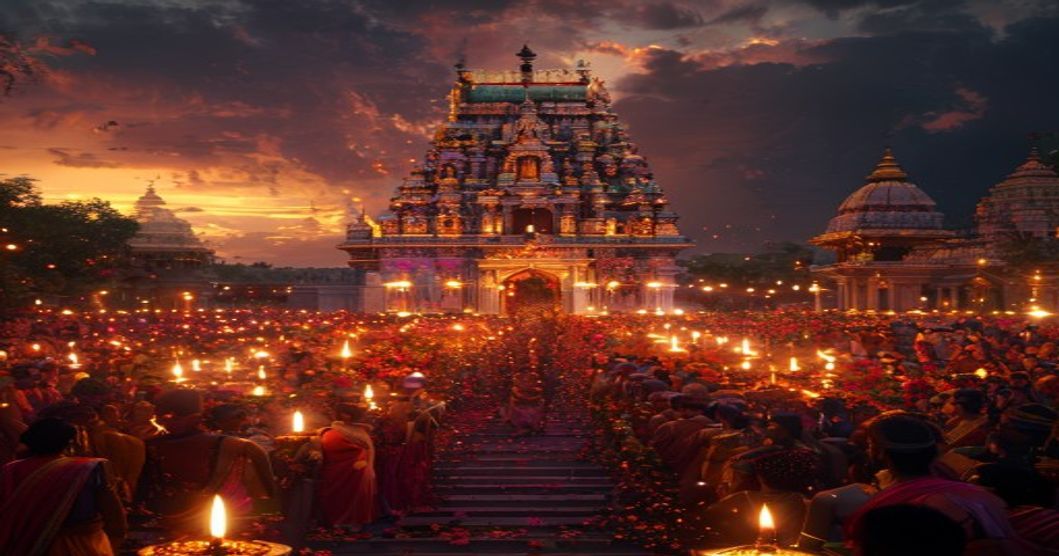
The term “Niladri” refers to the sacred Blue Hill (the Srimandir in Puri), and “Bije” signifies the royal entry. Therefore, Niladri Bije marks the formal, ceremonial homecoming of the deities as they return to the Garbhagriha (sanctum sanctorum) after their nine-day annual vacation. Without this emotional and sacred ritual, the entire Rath Yatra remains incomplete.
The Divine Conflict: Why Goddess Lakshmi Locked the Temple Gates
Unlike standard temple routines, the traditions of Lord Jagannath closely reflect human emotions and familial bonds, highlighting the profound teachings of divine love. According to ancient Odia scriptures and temple folklore, when Lord Jagannath departed for his journey to the Gundicha Temple along with his siblings, he did not invite his consort, Goddess Lakshmi.
Aggrieved by this exclusion, Goddess Lakshmi visited the Gundicha Temple on the fifth day (a day celebrated as Hera Panchami) to express her discontent. She secretly broke a piece of Lord Jagannath’s chariot, Nandighosha, and returned to the main temple, vowing to teach the Lord of the Universe a lesson upon His return.
When Lord Jagannath finally returns to Srimandir on Niladri Bije, he finds the main gates—the Jaya Vijaya Dwara—firmly shut by Goddess Lakshmi’s celestial attendants. What follows is an endearing divine dispute between the supreme preserver and his eternal consort.
The Sweet Reconciliation: Offering of Rasagola
To mollify his upset consort, Lord Jagannath resorts to sweet persuasion. Knowing her affinity for devotion and sweetness, the Lord offers her luscious, traditional Rasagolas (sweet cottage-cheese spheres soaked in sugar syrup).
Touched by His humble gesture and genuine love, Goddess Lakshmi relents, unlocks the temple doors, and grants passage to Lord Jagannath. This beautiful divine reconciliation is celebrated across Odisha as Rasagola Dibasa, honoring the centuries-old sweet culinary heritage linked directly to the Srimandir rituals.
Determining the precise timing for such sacred divine entry relies heavily on ancient astronomical calculations published in the holy Panchang to ensure the ritual takes place during an exceptionally auspicious Muhurat.
Key Highlights and Sacred Rituals of Niladri Bije
During Niladri Bije, several grand and rare rituals take place inside and outside the temple complex:
- Goti Pahandi: Unlike the collective procession during the start of the festival, the deities are carried back to the sanctum sanctorum one by one in a graceful, rhythmic swaying movement known as Goti Pahandi.
- Rasagola Bhog: Devotees distribute thousands of traditional Rasagolas as Mahaprasad to celebrate the reunion of Lord Jagannath and Goddess Lakshmi.
- Entry into Garbhagriha: Lord Balabhadra and Goddess Subhadra enter first without hindrance. Lord Jagannath enters last after successfully pacifying Goddess Lakshmi.
- Ratna Singhasana Re-enthronement: The divine siblings are lovingly seated back upon their throne of jewels, the Ratna Singhasana, marking the official end of the Rath Yatra festival.
Spiritual Significance: Divine Love and Human Emotions
The ritual of Niladri Bije offers profound spiritual lessons for modern seekers exploring spiritual wisdom at HinduDevGyan. It demonstrates that even the Supreme Almighty honors domestic harmony, respects his consort, and values humility and affection over absolute power.
The playful dynamic between Lord Jagannath and Goddess Lakshmi illustrates that supreme devotion is rooted in love, emotional honesty, and mutual respect. Just as the teachings of the Bhagavad Gita emphasize fulfilling duty and spiritual Karma with purity of heart, Niladri Bije shows that sincere affection can resolve even the deepest grievances.
Many believers also align their spiritual practices during this festival according to their personal cosmic energy and birth chart readings, consulting their Kundli to invoke the blessings of Goddess Lakshmi for peace, prosperity, and conjugal bliss in their households.
Conclusion
Niladri Bije is not merely the closing act of a grand festival; it is the emotional heart of the Jagannath cult. It bridges the gap between the divine and the human, transforming high philosophy into accessible, loving devotion. As Lord Jagannath re-ascends His jeweled throne after offering sweetness to Goddess Lakshmi, He bestows harmony, joy, and spiritual fulfillment upon every devotee who contemplates this holy reunion.