हिंदी सारांश:
- आगामी आदि शंकराचार्य जयंती (2027) की तिथि, शुभ मुहूर्त और पूजा विधि जानें।
- श्रीनगर और कश्मीर में शंकराचार्य के ऐतिहासिक महत्व और उनके जन्मोत्सव के उत्सवों को समझें।
- अद्वैत वेदान्त के दर्शन और शंकराचार्य के अमर योगदान को गहराई से जानें।
The streets of Srinagar, adorned with festive zeal, and the entire Kashmir Valley rejoicing alongside Kashmiri Pandits, recently offered a poignant glimpse into the timeless reverence for India’s greatest spiritual luminaries. This vibrant celebration, echoing deep cultural roots, reminds us of the profound impact of ancient sages. As we anticipate the upcoming Adi Shankara Jayanti in 2027, commemorating what many consider his 5253rd spiritual birth anniversary, it’s a moment to delve into the life, philosophy, and enduring legacy of one of Sanatana Dharma’s most pivotal figures.
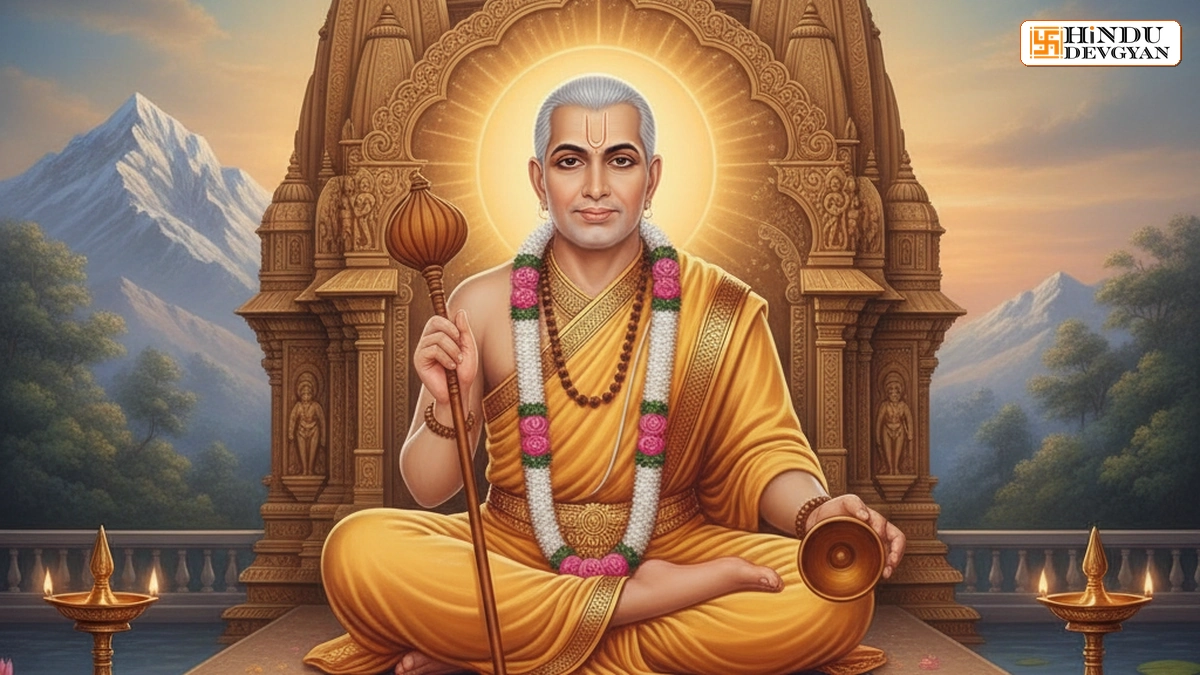
Adi Shankaracharya, the unparalleled exponent of Advaita Vedanta, revived and re-established the foundational principles of Hindu thought. His short yet extraordinarily impactful life journey saw him traverse the length and breadth of Bharat, establishing monastic orders (Mathas) and unifying diverse philosophical streams under the banner of non-dualism. The very spirit of joy witnessed in Srinagar — a region deeply connected to his historical journey, particularly the revered Shankaracharya Temple (also known as Jyeshteshwara Temple) — is a testament to his eternal presence.
Significance & Vedic Shastric Context
Adi Shankara Jayanti celebrates the birth of Jagadguru Adi Shankaracharya, who is considered an incarnation of Lord Shiva. Born in Kalady, Kerala, in the 8th century CE, his teachings revolutionized Hindu philosophy by expounding Advaita Vedanta, which posits the ultimate identity of the Atman (individual soul) with Brahman (the Ultimate Reality). This profound wisdom, encapsulated in the Mahavakya ‘Aham Brahmasmi’ (I am Brahman), dissolved the perceived duality between the individual and the cosmos, offering a path to liberation (Moksha).
Transform Your Home’s Energy Today!
Discover the ancient secrets to attracting wealth, health, and harmony. Download our premium 5-chapter Vastu Shastra guide instantly.
His contributions include commentaries (Bhashyas) on the Prasthanatrayi (Upanishads, Brahma Sutras, and Bhagavad Gita), numerous Stotras (devotional hymns), and Prakarana Granthas (treatises). He organized the Dashanami Sampradaya and established four major Mathas at Sringeri, Puri, Dwarka, and Badrinath, which continue to guide spiritual aspirants even today. His historic visit to Kashmir, where he ascended the Sarvajna Peetha (Throne of Omniscience) at the Shankaracharya Temple, underscores the region’s sacred connection to his mission.
ब्रह्म सत्यं जगन्मिथ्या, जीवो ब्रह्मैव नापरः।
📲 Join Our WhatsApp Channel
रोज़ सुबह पाएं — पंचांग, मंत्र, और आध्यात्मिक ज्ञान सीधे WhatsApp पर。
Get daily Panchang, Mantras & Spiritual Wisdom every morning.Brahma Satyam Jaganmithya, Jivo Brahmaiva Nāparah.
Word-by-word meaning:
Brahma (Brahman, the Absolute Reality) Satyam (is true)
Jagat (the world) Mithya (is illusory/not ultimately real)
Jivo (the individual soul) Brahma (Brahman) Eva (alone) Na Aparah (and no other/is none other than).This iconic statement, attributed to Adi Shankara, encapsulates the core tenet of Advaita Vedanta: Brahman is the only truth, the world is an illusion, and the individual soul is non-different from Brahman.
Step-by-Step Vidhi, Shubh Muhurat & Planetary Influences
Adi Shankara Jayanti is observed on the Panchami Tithi of the Shukla Paksha (bright half) in the Hindu month of Vaishakha. In 2027, this auspicious day falls on Friday, April 23rd.
| Event | Date (2027) | Time (IST) |
|---|---|---|
| Panchami Tithi Begins | April 22, Thursday | 10:29 PM |
| Panchami Tithi Ends | April 23, Friday | 08:16 PM |
To celebrate Adi Shankara Jayanti, devotees should follow a reverent Panchang-guided Vidhi:
- Early Morning Bath: Wake up before sunrise, take a purifying bath, and wear clean clothes.
- Sankalp: Take a solemn vow (Sankalp) to observe the Jayanti with devotion for spiritual growth and wisdom.
- Altar Setup: Place an idol or picture of Adi Shankaracharya on a clean altar. Offer him fresh flowers, especially lotus and jasmine, incense sticks, and a ghee lamp.
- Puja & Aarti: Offer fruits, sweets, and milk. Recite hymns dedicated to Adi Shankaracharya, Guru Vandana, and meditate on his teachings. Perform Aarti with devotion.
- Reading Scriptures: Dedicate time to study Adi Shankara’s works, particularly his commentaries on the Upanishads or the Bhagavad Gita. Reflect on the profound wisdom of Advaita Vedanta. For deeper insights, explore our Bhagavad Gita wisdom section.
- Charity: Offer food or aid to Brahmins, students, or those in need, especially those pursuing Vedic studies.
- Satsang & Discussion: Participate in spiritual discourses (Satsang) on Advaita philosophy.
Planetary influences on this day are generally favorable for intellectual pursuits, spiritual awakening, and gaining clarity. The Moon’s position, combined with the general auspiciousness of Vaishakha month, amplifies the energies conducive to meditation and self-realization. Consulting your personal Kundli can provide deeper insights into planetary alignments relevant to your spiritual practice.
Important Dos & Don’ts to Avoid Shastric Karma Errors
Observing Adi Shankara Jayanti with sincerity requires adherence to certain principles:
- Do’s:
- Meditate and Reflect: Engage in deep meditation on the oneness of Atman and Brahman.
- Study Scriptures: Devote time to studying Shankara’s philosophical works.
- Maintain Purity: Observe physical and mental purity throughout the day.
- Seek Guru’s Blessings: If possible, seek blessings from a spiritual preceptor or an Advaita scholar.
- Don’ts:
- The 1 Mistake to Avoid: The most crucial mistake to avoid is treating this day merely as a ritualistic observance without understanding the profound philosophical essence of Advaita. Adi Shankara emphasized experiential realization (Anubhuti), not just dry intellectualism or superficial rituals. Engage your mind and heart in understanding his teachings.
- Avoid Worldly Distractions: Minimize engagement in materialistic or trivial pursuits.
- Avoid Non-Sattvic Food: Abstain from Tamasic (heavy, stale) and Rajasic (spicy, overly stimulating) foods.
- Do not Criticize: Refrain from engaging in criticism or negative speech, especially regarding spiritual paths or teachers.
Frequently Asked Questions
- Q1: Why is Adi Shankara Jayanti significant?
- A1: It marks the birth of Adi Shankaracharya, who revived Sanatana Dharma through his Advaita Vedanta philosophy, unifying diverse spiritual traditions and establishing monastic orders across India. It’s a day to reflect on his timeless wisdom.
- Q2: What is the main teaching of Adi Shankaracharya?
- A2: His core teaching, Advaita Vedanta, emphasizes the non-dual nature of reality, asserting that Brahman (the Absolute Truth) is the only reality, and the individual soul (Atman) is identical with Brahman. The perceived world is ultimately illusory (Maya).
- Q3: Can anyone celebrate Adi Shankara Jayanti, regardless of their background?
- A3: Absolutely. While rooted in Hindu tradition, Adi Shankara’s message of universal oneness and the pursuit of truth transcends sectarian boundaries. Anyone can observe this day by reflecting on his philosophy, meditating, and seeking knowledge.
🔮 Curious About Your Birth Chart?
Discover your exact career path, marriage compatibility, and planetary dashas based on your exact birth time.
⭐ Recommended for You
Contains affiliate links. We earn a small commission at no extra cost to you.
Auspicious copper vessel for Puja, Kalash Sthapana and daily water offerings.