हिंदी सारांश:
- भगवान कुबेर के पुत्र, नलकूबर और मणिग्रीव, अपने अत्यधिक अहंकार और धन के मद में चूर होकर साधु नारद के शाप से वृक्ष बन गए।
- वृंदावन में भगवान श्रीकृष्ण की बाल लीला के दौरान, यशोदा मैया द्वारा ऊखल से बाँधे जाने पर, उन्होंने दो वृक्षों को गिरा दिया, जिससे नलकूबर और मणिग्रीव को अपने शाप से मुक्ति मिली।
- यह कथा अहंकार के पतन और दिव्य कृपा की शक्ति का प्रतीक है, जो हमें नम्रता और सच्ची भक्ति का महत्व सिखाती है।
In the vast ocean of Hindu mythology, where every current carries a profound lesson, few tales resonate with such timeless wisdom and transformative power as that of Nalakubara and Manigriva, the sons of Lord Kubera, the celestial treasurer. Their story is a stark reminder that even immense wealth and privilege can be fleeting when humility is lost. Yet, it also unveils the infinite compassion of Lord Krishna, capable of rewriting even the most cursed destinies.
Significance & Vedic Shastric Context
This epic narrative, primarily found in the sacred pages of the Srimad Bhagavatam (Bhagavata Purana), specifically in Canto 10, Chapter 10, is not merely a children’s story of Krishna’s playful antics. It is a profound treatise on the perils of material intoxication, the inexorable law of karma, and the redemptive power of divine intervention. It highlights the principle that true prosperity lies not in material possessions, but in spiritual purity and devotion.
Nalakubara and Manigriva, though blessed with unparalleled beauty, opulence, and youth due to their lineage as Kubera’s sons, became blinded by their fortunes. They indulged in hedonistic pursuits, often in the company of celestial damsels, entirely oblivious to the spiritual sanctity around them. Their pride reached such an zenith that they even disrespected the great sage Narada Muni, who encountered them bathing unclothed in a pristine river, utterly lost in their revelry.
Transform Your Home’s Energy Today!
Discover the ancient secrets to attracting wealth, health, and harmony. Download our premium 5-chapter Vastu Shastra guide instantly.
Narada, known for his wisdom and foresight, understood that such unchecked arrogance would lead to their ruin. To correct their path and grant them a unique opportunity for salvation, he cursed them to become inanimate Arjuna trees for a hundred celestial years. This curse, seemingly harsh, was a disguised blessing, for it placed them in Vrindavan, the divine playground of Lord Krishna, ensuring their eventual liberation by the Lord Himself.
श्री मद्भागवतम् १०.१०.३७
जन्म-ऐश्वर्य-श्रुत-श्रीभिर् एधमान-मदः पुमान्
नैवार्हत्य अभिधातुं वै त्वाम् अकिञ्चन-गोचरम्📲 Join Our WhatsApp Channel
रोज़ सुबह पाएं — पंचांग, मंत्र, और आध्यात्मिक ज्ञान सीधे WhatsApp पर。
Get daily Panchang, Mantras & Spiritual Wisdom every morning.Transliteration:
janma-aiśvarya-śruta-śrībhir edhamāna-madaḥ pumān
naivārhaty abhidhātuṁ vai tvām akiñcana-gocaramWord-by-word meaning:
जन्म (janma): by birth
ऐश्वर्य (aiśvarya): by opulence
श्रुत (śruta): by education
श्रीभिः (śrībhiḥ): by beauty (or prestige)
एधमान-मदः (edhamāna-madaḥ): increasing pride
पुमान् (pumān): a person
नैव (naiva): never indeed
अर्हति (arhati): is able
अभिधातुम् (abhidhātum): to approach, to address
वै (vai): certainly
त्वाम् (tvām): You
अकिञ्चन-गोचरम् (akiñcana-gocaram): who are attained only by those who are materially impoverished or humbleTranslation:
“A person whose pride is inflamed by birth, opulence, education, and beauty can never truly approach or understand You, O Lord, for You are accessible only to those who are humble and devoid of material attachments.”
Applying Ancient Wisdom: Lessons for Today’s Journey
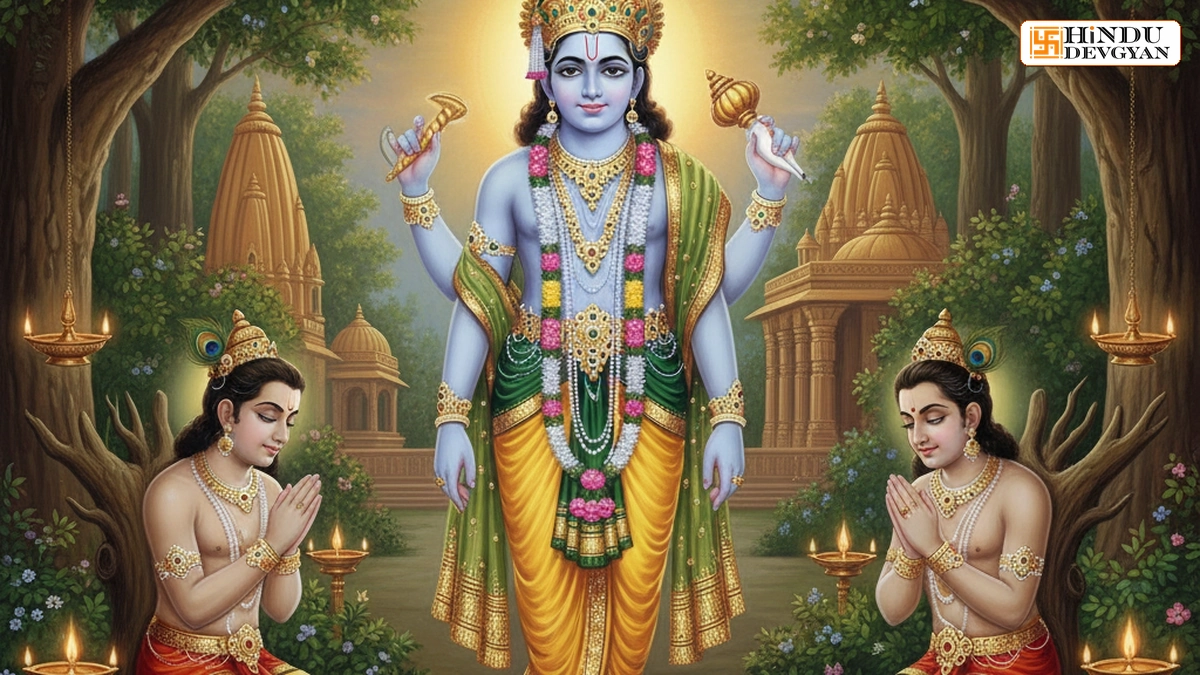
The story culminates in Vrindavan, where a mischievous infant Krishna, tied to a grinding mortar by His exasperated mother Yashoda, drags the heavy mortar between two towering Arjuna trees. With a divine tug, Krishna uproots the trees, and from their trunks emerge Nalakubara and Manigriva, now freed from their curse and radiating spiritual effulgence. They offer heartfelt prayers to Lord Krishna, finally realizing the futility of material opulence without devotion.
This narrative offers profound insights for our modern lives, especially concerning karma and destiny. While we may not turn into trees, our actions, especially those driven by arrogance and disrespect, sow seeds of future difficulties. However, just as Krishna intervened, divine grace can alter our path. This Saturday, September 5, 2026, a day often associated with Saturn (Shani), making it ideal for introspection and rectifying past errors, consider these spiritual practices:
- Cultivate Humility: Recognize that all our blessings are gifts, not entitlements. Practice gratitude.
- Engage in Selfless Service (Seva): Dedicate a part of your time to helping others without expectation.
- Chant and Meditate: Regular spiritual practice helps cleanse the mind of arrogance and fosters inner peace. For guidance on finding auspicious timings, consult our daily Panchang.
- Study Sacred Texts: Dive into the Gita’s timeless wisdom to understand karma and righteous living.
Important Dos & Don’ts to Avoid Shastric Karma Errors
The tale of Kubera’s sons offers clear guidance on ethical conduct:
- DO Cultivate Humility: Always remember that true wealth is spiritual. Respect all beings, regardless of their status.
- DO Practice Gratitude: Be thankful for your blessings and avoid taking them for granted.
- DO Engage in Righteous Actions: Strive for dharma (righteous conduct) in all your endeavors.
- DON’T Be Arrogant or Vain: Pride in wealth, beauty, or lineage can lead to downfall, just as it did for Nalakubara and Manigriva.
- DON’T Disrespect Elders or Sages: Show reverence to those who embody wisdom and spiritual pursuit.
- DON’T Indulge Excessively: While enjoyment is natural, uncontrolled indulgence can lead to spiritual blindness and neglect of duties.
By internalizing these lessons, we can avoid karmic pitfalls and pave the way for a destiny filled with genuine prosperity and divine grace. For personalized insights into your life’s path and potential karmic influences, consider exploring our free Kundli analysis.
Frequently Asked Questions
- Q1: Who were Nalakubara and Manigriva?
- A1: Nalakubara and Manigriva were the two sons of Lord Kubera, the celestial treasurer. They were known for their immense wealth, beauty, and consequent arrogance.
- Q2: Why were Kuber’s sons cursed?
- A2: They were cursed by Sage Narada Muni to become Arjuna trees because of their extreme arrogance, intoxication with wealth and beauty, and disrespect towards the sage while they were engrossed in hedonistic activities.
- Q3: How did Lord Krishna free them from the curse?
- A3: During His childhood pastimes in Vrindavan, Lord Krishna, tied to a grinding mortar by His mother Yashoda, dragged the mortar between the two Arjuna trees. By His divine will and strength, the trees were uprooted, and Nalakubara and Manigriva emerged from them, liberated from their curse and receiving Krishna’s darshan.
🔮 Curious About Your Birth Chart?
Discover your exact career path, marriage compatibility, and planetary dashas based on your exact birth time.
⭐ Recommended for You
Contains affiliate links. We earn a small commission at no extra cost to you.
Auspicious copper vessel for Puja, Kalash Sthapana and daily water offerings.