
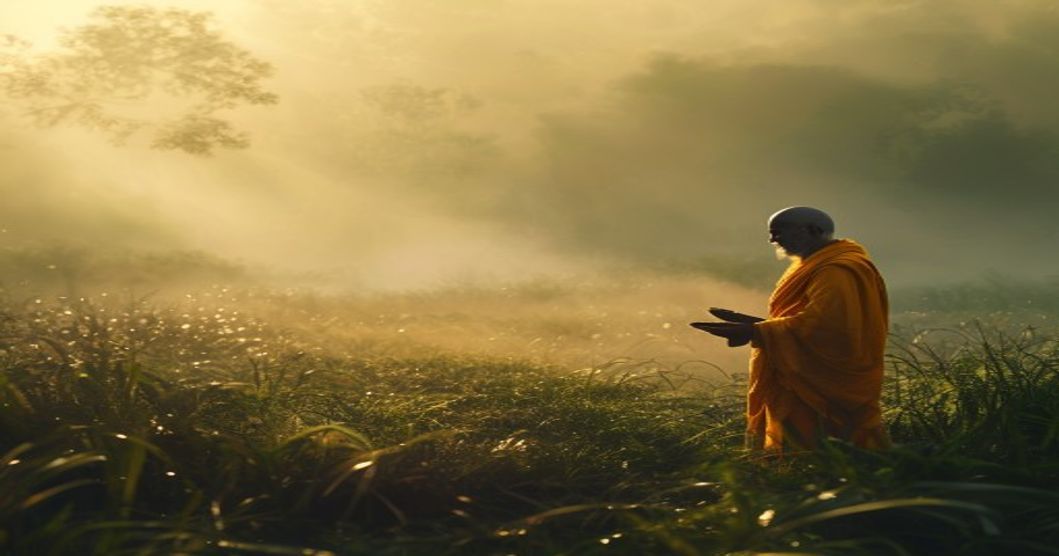
Among the twelve monthly new moon days in the Sanatana tradition, Kushotpatini Amavasya—also known as Kushagrahani Amavasya or Pithori Amavasya—holds an irreplaceable spiritual significance. Falling in the sacred month of Bhadrapada, this unique new moon day offers a once-a-year divine dispensation: the ritual permission to uproot and gather sacred Kusha grass (Desmotachya bipinnata) for an entire year’s worth of Vedic rituals, Havans, and ancestral Tarpan rites.
According to ancient Vedic scriptures, Kusha grass plucking is strictly prohibited on ordinary days. However, on this specific tithi, under precise auspicious Panchang timings and Muhurat, divine energies align, allowing devotees and priests to harvest this holy grass without incurring any sin, provided the sacred rules are observed.
The Divine Origin and Importance of Kusha Grass in Vedic Rites
In Sanatana Dharma, Kusha grass is not merely a botanical plant; it is considered an incarnation of divine energy. Scriptural lore links the creation of Kusha grass directly to Lord Vishnu. It is believed that during the Varaha avatar (the boar incarnation) or the churning of the cosmic ocean (Samudra Manthan), strands of divine hair fell upon the Earth, transforming into the holy Kusha grass.
Vedic science recognizes Kusha as a natural insulator of spiritual energy. When a practitioner sits on a Kusha Aasan (mat) during japa or meditation, it prevents the subtle spiritual electricity generated during prayer from leaking into the ground. Furthermore, no Vedic ritual, Yajna, or ancestral Pinda Daan is deemed complete without wearing a ring made of Kusha grass (known as a Pavitri) on the ring finger.
Scriptural Rules for Harvesting Sacred Kusha Grass
To preserve the spiritual sanctity and potency of the grass, Vedic texts specify precise guidelines that must be followed on Kushotpatini Amavasya. Devotees gathering Kusha grass must keep the following rules in mind:
- Morning Purity: The harvest must be performed early in the morning after taking a bath and dressing in clean, unstitched white or saffron clothes.
- Directional Alignment: The person plucking the grass must face either the East (direction of the Sun) or the North (direction of divine wealth and spiritual purity).
- No Metal Tools: Sacred Kusha grass must be gently uprooted using bare hands. Metal tools like iron scythes or knives must never be used.
- Intact and Undamaged: Only grass that is intact, deep green, unbroken, and has leaves pointing upwards should be collected. Grass growing in unclean places or burial grounds must be strictly avoided.
- The Divine Mantra: Before plucking, devotees must bow to the earth and recite the sacred chant: “Om Phat Swaha” or the traditional Vedic invocation seeking permission from Mother Earth.
Remedies for Pitru Dosh and Vastu Energy Alignment
Kushotpatini Amavasya is deeply intertwined with ancestor worship. Performing Tarpan and offering water infused with Kusha grass to ancestors on this day brings immense peace to departed souls. Individuals suffering from afflictions like Pitru Dosh in their personal Kundli or birth chart can find substantial relief through dedicated offerings on this tithi.
Placing a bundle of fresh Kusha grass gathered on this day near the main entrance or altar of your home aligns with divine Vastu principles, shielding the household from negative vibrations, evil eyes, and psychic blockages throughout the year.
By understanding the cosmic laws governing these sacred traditions, as emphasized in timeless scriptural wisdom and the Bhagavad Gita’s wisdom on Karma, one learns to honor nature’s spiritual resources. For more deep insights into Vedic rituals, festivals, and spiritual lifestyle guide, explore our knowledge center at HinduDevGyan.