
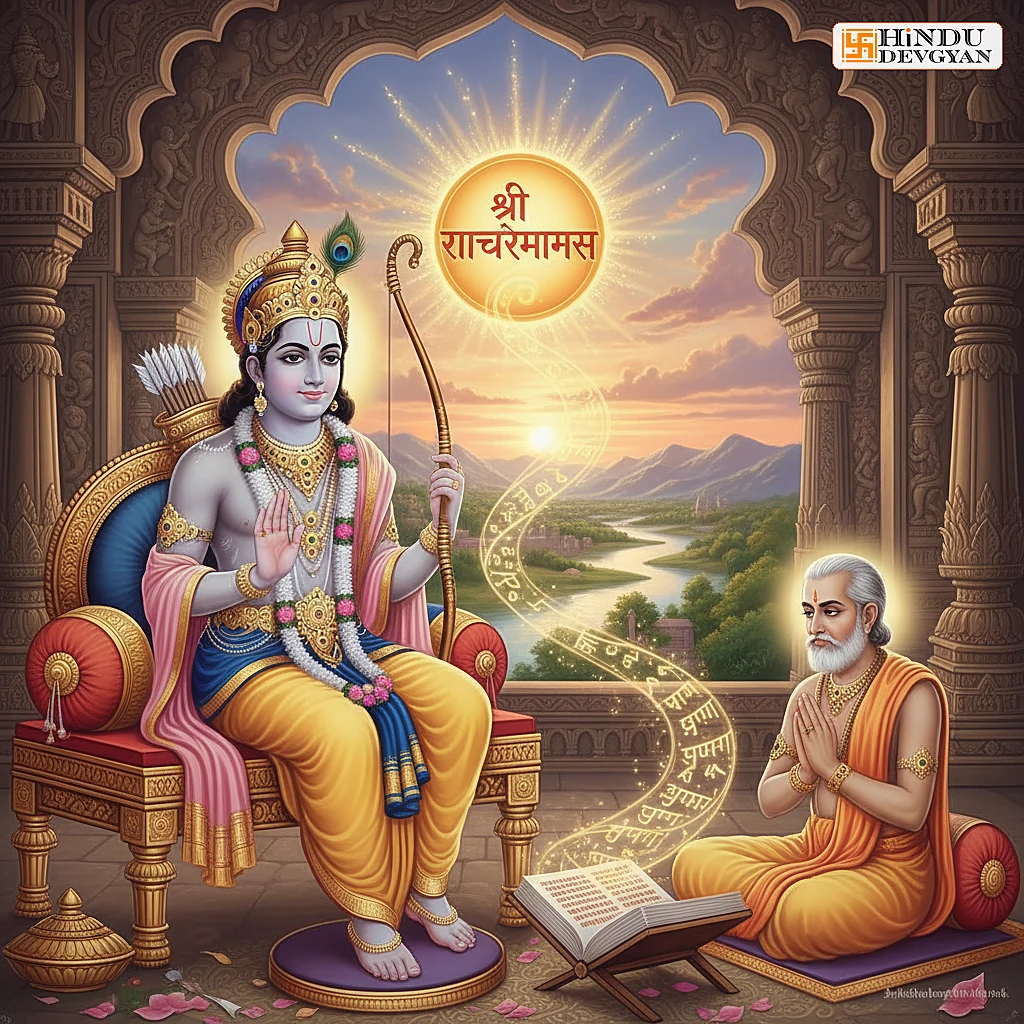
हिंदी सारांश:
- गोस्वामी तुलसीदास जी ने श्रीरामचरितमानस की रचना जनसामान्य की भाषा ‘अवधी’ में की ताकि हर व्यक्ति प्रभु श्रीराम की भक्ति से जुड़ सके।
- काशी के संस्कृत विद्वानों ने लोकभाषा में ग्रंथ लिखने का विरोध किया, परंतु भगवान शिव ने स्वप्न में तुलसीदास जी को लोकभाषा में ही काव्य रचने का आदेश दिया।
- काशी विश्वनाथ मंदिर में जब इस ग्रंथ की परीक्षा ली गई, तो पांडुलिपि पर ‘सत्यं शिवं सुंदरम्’ अंकित मिला, जिससे इसकी सर्वोपरि पवित्रता सिद्ध हुई।
Significance & Vedic Context
In the 16th century, Vedic scholarship in Kashi (Varanasi) was entirely dominated by the Sanskrit language. Traditional pandits believed that sacred epics like Maharishi Valmiki’s Ramayana should only exist in Sanskrit, the language of the devas. However, Goswami Tulsidas realized that Sanskrit had become inaccessible to the common masses, women, and laboring classes who were eager to understand the life and teachings of Lord Rama.
When Tulsidas began translating the divine narrative in Varanasi, he initially attempted to compose it in Sanskrit. According to traditional legends recorded in Vedic hagiographies, every verse Tulsidas wrote in Sanskrit during the day would mysteriously disappear by the next morning. Perplexed by this daily phenomenon, Tulsidas prayed deeply at the Manikarnika Ghat. Lord Shiva and Mata Parvati appeared in his dream, directing him to write in his native spoken dialect, Awadhi, so that devotion could flow directly into the hearts of everyday seekers.
This divine shift democratized devotion across Northern India. By placing the sacred story in Awadhi, Tulsidas proved that true spiritual liberation comes through sincere devotion (Bhakti Yoga) rather than linguistic exclusivity. Readers interested in analyzing how planetary alignments influence spiritual inclinations can check their personalized free Kundli on our portal.
Transform Your Home’s Energy Today!
Discover the ancient secrets to attracting wealth, health, and harmony. Download our premium 5-chapter Vastu Shastra guide instantly.
📲 Join Our WhatsApp Channel
रोज़ सुबह पाएं — पंचांग, मंत्र, और आध्यात्मिक ज्ञान सीधे WhatsApp पर。
Get daily Panchang, Mantras & Spiritual Wisdom every morning.
स्वान्तःसुखाय तुलसी रघुनाथगाथा-भाषाबध्दामतिमञ्जुलमातनोति॥
Transliteration: Svāntaḥsukhāya tulasī raghunāthagāthā-bhāṣābaddhāmatimañjulamātanoti॥
Word-by-Word Meaning: Svāntaḥsukhāya = For the inner bliss of his own soul; Tulasī = Saint Tulsidas; Raghunātha-gāthā = The epic tale of Lord Rama; Bhāṣābaddhām = Composed in the local spoken vernacular; Atimañjulam = Most charmingly and beautifully; Ātanoti = Expounds and spreads.
Rituals, Vidhi & Muhurat
The writing of Shri Ramcharitmanas commenced on the auspicious day of Ram Navami in Ayodhya in the Vikram Samvat year 1631 (1574 CE). To this day, reciting the verses of Ramcharitmanas brings peace, removes domestic conflicts, and counteracts planetary afflictions.
How to Perform Ramcharitmanas Path at Home
- Purification: Clean the puja space thoroughly in the North-East corner of your home, adhering to classical setup rules detailed in our HinduDevGyan spiritual directory.
- Altar Setup: Place a yellow cloth on a wooden stool (chowki) and install pictures or murtis of Bhagwan Shri Ram, Mata Sita, Lakshmana, and Shri Hanuman.
- Lighting the Lamp: Light a pure cow ghee lamp (diya) and offer fresh yellow flowers, sandalwood paste, and tulsi leaves.
- Sankalp & Recitation: Begin reading the Chopais starting from Bal Kand after invoking Hanumanji, who is considered the guardian of every Ramcharitmanas recitation.
For those organizing an uninterrupted 24-hour Akhand Ramayan Path, always verify the auspicious Tithi, Choghadiya, and Shubh Muhurat via the live Panchang guidelines before commencing.
| Spiritual Aspect | Sanskrit Valmiki Ramayana | Awadhi Ramcharitmanas |
|---|---|---|
| Primary Audience | Scholars & Vedic Priests | Common Masses & Devotees |
| Dominant Emotion | Dharma & Grand Epic Narrative | Pure Bhakti & Selfless Surrender |
| Divine Patronage | Brahma’s Benediction | Lord Shiva’s Divine Approval (Kashi) |
Frequently Asked Questions
Why did scholars in Kashi oppose Ramcharitmanas?
Scholars in Varanasi opposed the epic because it was written in Awadhi, a local spoken dialect, rather than Sanskrit. They considered it a departure from ancient orthodox tradition until divine signs proved its sanctity.
How was the sacred purity of Ramcharitmanas tested at Kashi Vishwanath Temple?
The manuscript was placed at the bottom of a stack of Sanskrit scriptures inside the locked inner sanctum of the Vishwanath temple overnight. In the morning, Tulsidas’ Awadhi manuscript was found on top of all books with the inscription ‘Satyam Shivam Sundaram’ stamped on it.
What is the spiritual connection between Ramcharitmanas and Gita wisdom?
Both scriptures emphasize selfless duty and total surrender to the Supreme Lord. You can explore deeper insights on righteous living through our detailed Gita Wisdom section.
🔮 Curious About Your Birth Chart?
Discover your exact career path, marriage compatibility, and planetary dashas based on your exact birth time.
⭐ Recommended for You
Contains affiliate links. We earn a small commission at no extra cost to you.
Complete brass thali with diya, incense holder, bell and more for daily puja.