The holy month of Shravan (Sawan) holds a highly revered position in Hindu spirituality. It is a period of intense devotion, fasting, and deep connection with the cosmos. Among the various rituals performed during this sacred month, the act of offering water, known as Jalabhishek, to the Shiva Lingam is considered the most sacred. But have you ever wondered about the profound spiritual science and cosmic history behind this simple ritual?
To truly understand why we pour water on Lord Shiva during Sawan, we must journey back to the golden age of Puranic history—specifically to the legendary event of Samudra Manthan (the Churning of the Cosmic Ocean).
The Legend of Samudra Manthan and the Rise of Halahal
According to the Vedic scriptures, a great churning of the cosmic ocean was undertaken jointly by the Devas (demigods) and the Asuras (demons) to extract Amrit (the nectar of immortality). As the mighty mountain Mandara was used as a churning rod and the great serpent Vasuki served as the rope, several divine gems emerged from the ocean depths.
However, before the nectar of immortality could surface, a terrifying obstacle arose: the Halahal poison. This was no ordinary toxin; it was a lethal, cosmic poison capable of wiping out all creation and burning the three worlds into ash. As the heat of the poison began to suffocate the universe, the gods and demons fled in terror, realizing that only one supreme entity possessed the power to neutralize this ultimate threat—Lord Shiva.
The Birth of ‘Neelkanth’: The Savior of the Universe
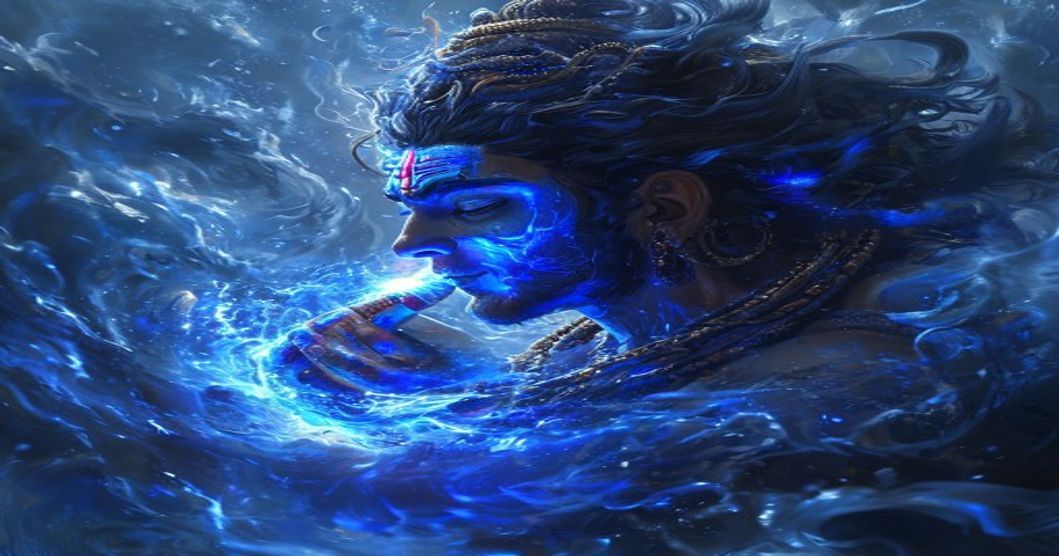
Moved by the prayers of the desperate creation, Mahadev stepped forward. Out of sheer compassion, Lord Shiva gathered the deadly Halahal poison and drank it. To prevent the poison from descending into His stomach and harming the world inside Him, His divine consort, Goddess Parvati, gently pressed His throat.
The poison was contained in His throat, turning it a deep, mystical blue. From that momentous day, Lord Shiva came to be known as Neelkanth (the blue-throated one). He absorbed the negativity of the universe, demonstrating the ultimate law of sacrifice and unconditional love.
Why We Perform Jalabhishek in the Holy Month of Shravan
While the universe was saved, the intense heat and thermal energy of the Halahal poison left Lord Shiva’s body burning with excruciating heat. To soothe and cool the great Lord of Ascetics, all the gods and goddesses began pouring the holy waters of the Ganges upon Him.
This divine event took place during the month of Shravan. Therefore, performing Jalabhishek during Sawan is a symbolic recreation of this cosmic act of gratitude. Here is why this ritual is highly recommended on HinduDevGyan:
- Cooling the Divine Energy: Offering water, raw milk, or Panchamrit cools the symbolic heat of the Shiva Lingam, bringing peace to the environment.
- Soothening the Mind: Scientifically, Shravan marks the peak of the monsoon season. Offering water to Shiva helps align our inner biological energies with the changing external seasonal rhythms.
- Washing Away Negativity: Just as Shiva absorbed the toxic Halahal, offering Him water symbolizes our desire to surrender our inner poisons—anger, ego, greed, and bad Karma—at His feet.
Astrological and Spiritual Significance of Shravan Somvar
In Vedic astrology, Shravan is ruled by the Moon (Chandra), which is closely associated with our mind and emotions. Since Lord Shiva adorns the crescent moon on His matted locks, worshipping Him during this month has a profoundly calming effect on our mental state.
If you are experiencing mental restlessness, delays in career, or relationship discord, checking your birth chart or Kundli can reveal how planetary transits in Shravan are impacting you. Performing Jalabhishek on Shravan Mondays (Somvar) during the auspicious hours calculated via the Vedic Panchang can significantly mitigate the negative planetary influences of Rahu, Ketu, and Saturn.
How to Correctly Perform Jalabhishek at Home or Temple
To maximize the spiritual benefits of your Shravan worship, follow these authentic Vedic steps:
- Wake up during the Brahma Muhurta and take a purifying bath.
- Prepare a copper or brass pot (Lota) filled with clean water, preferably mixed with a few drops of sacred Ganga water.
- Add a few grains of unbroken rice (Akshat), black sesame seeds, and fresh Bilva leaves (Belpatra) into the water.
- Slowly pour the water over the Shiva Lingam while continuously chanting the powerful mantra: “Om Namah Shivaya” or the Mahamrityunjaya Mantra.
- Conclude the ritual by offering sandalwood paste, incense, and a sweet offering (Prasad).
By offering water to Neelkanth during Sawan, we do not just perform a ritual; we participate in a cosmic act of healing, purification, and spiritual rejuvenation that has sustained humanity for millennia.