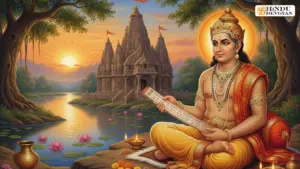
सर्वकर्माणि मनसा संन्यस्यास्ते सुखं वशी। नवद्वारे पुरे देही नैव कुर्वन्न कारयन्॥
“The embodied soul, mastering his nature, mentally renounces all actions and dwells happily in the city of nine gates, neither acting nor causing action.”
हिंदी सारांश:
यह श्लोक बताता है कि कैसे हम अपने मन को नियंत्रित करके और कर्मों के फल की आसक्ति छोड़कर, शरीर रूपी नौ द्वारों वाले नगर में रहते हुए भी आंतरिक सुख प्राप्त कर सकते हैं। यह हमें बताता है कि वास्तविक शांति बाहरी गतिविधियों में लिप्त होने या उनसे दूर भागने में नहीं, बल्कि मन की साक्षी अवस्था में निहित है।
In Bhagavad Gita Chapter 5 Verse 13, Lord Krishna reveals a profoundly practical and liberating truth about living in the world without being entangled by its actions. This verse offers a blueprint for achieving inner peace and equanimity, even amidst the most demanding aspects of modern life, by teaching the art of mental renunciation.
The “City of Nine Gates”: Your Body
The Bhagavad Gita often uses vivid metaphors to convey deep spiritual truths. Here, our physical body is described as a “city of nine gates” (two eyes, two ears, two nostrils, mouth, anus, and genitals). We, the embodied souls, reside within this city, constantly interacting with the external world through these gates. The challenge, as this verse highlights, is not to cease all action, but to master our internal disposition towards those actions.
Transform Your Home’s Energy Today!
Discover the ancient secrets to attracting wealth, health, and harmony. Download our premium 5-chapter Vastu Shastra guide instantly.
📲 Join Our WhatsApp Channel
रोज़ सुबह पाएं — पंचांग, मंत्र, और आध्यात्मिक ज्ञान सीधे WhatsApp पर।
Get daily Panchang, Mantras & Spiritual Wisdom every morning.
Mastering the Mind: The Key to Renunciation
The core teaching of this verse is manasā sannyasya – mentally renouncing all actions. This doesn’t imply physical inaction or withdrawal from responsibilities. Instead, it advocates for a shift in consciousness where one performs duties without attachment to the results or the sense of doership. It’s about acting out of dharma, with skill and dedication, but releasing the need for a specific outcome. This detachment from the fruits of action is a central theme in Bhagavad Gita wisdom, ensuring our efforts are pure and not driven by ego or selfish desires.
Dwelling Happily: Beyond Action and Inaction
When we master this mental renunciation, we dwell “happily” (sukham āste). This happiness is not fleeting pleasure but a deep, unshakeable serenity that comes from spiritual freedom. We are neither actively performing actions with attachment nor are we causing others to act with self-interest. This state of non-doership, even while physically active, is the hallmark of a truly liberated soul. It’s about being present, performing one’s Karma with full attention, yet maintaining an inner awareness that the true self is beyond the transient play of material nature.
Modern Application: Finding Peace in Busy Lives
In our fast-paced world, often characterized by stress and the pressure to achieve, this verse offers immense solace. Imagine tackling your daily work, your family responsibilities, or community service with full commitment, yet without the emotional roller-coaster of success or failure. By adopting this mental stance, we reduce anxiety, cultivate resilience, and experience a profound sense of inner calm. It allows us to participate fully in life’s drama without becoming a victim of its outcomes. For more insightful spiritual guidance and practical wisdom, explore resources available on HinduDevGyan. This timeless teaching encourages us to find our deepest self, untouched by the world’s fluctuations, and live a life of true purpose and peace.
🔮 Curious About Your Birth Chart?
Discover your exact career path, marriage compatibility, and planetary dashas based on your exact birth time.
⭐ Recommended for You
Contains affiliate links. We earn a small commission at no extra cost to you.
The world’s most widely read edition of the Gita with original Sanskrit, transliteration, and commentary.