
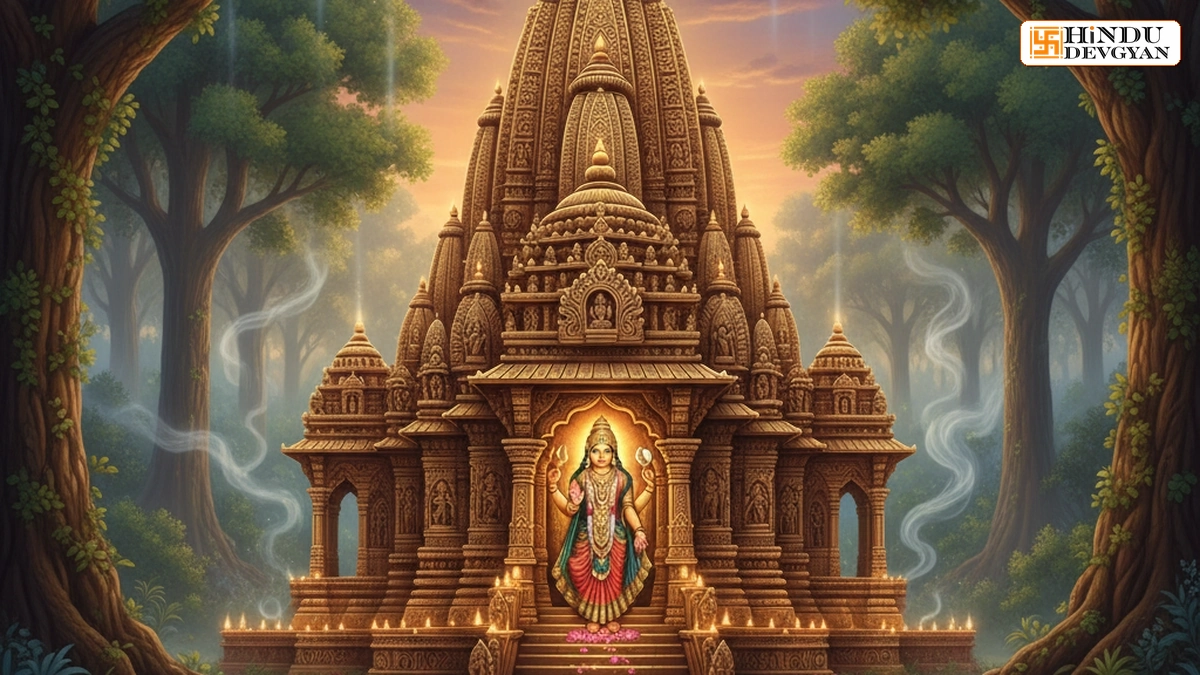
हिंदी सारांश:
- ओडिशा का गुप्तेश्वरी देवी मंदिर साल में केवल 11 दिनों के लिए खुलता है, जिसका रहस्यमय कारण इसकी गहन आध्यात्मिक ऊर्जा से जुड़ा है।
- यह मंदिर मार्गशीर्ष माह के शुक्ल पक्ष की प्रतिपदा से एकादशी तक (19 दिसंबर से 29 दिसंबर, 2026 तक) भक्तों के लिए खुला रहेगा।
- इस दौरान माँ गुप्तेश्वरी के दर्शन का सौभाग्य प्राप्त करने के लिए विस्तृत दर्शन गाइड, यात्रा जानकारी और आवश्यक नियम यहाँ दिए गए हैं।
Namaste, spiritual seekers and devotees of the Divine Mother! As your dedicated Spiritual Travel Journalist and Hindu Religious Scholar, I bring you an exclusive insight into one of India’s most enigmatic and profoundly sacred shrines. Prepare to be captivated by the ancient wisdom and mystical energy surrounding the Maa Gupteshwari Temple in the serene, verdant heart of Odisha. This isn’t just any temple; its doors open for a mere 11 days each year, holding a secret so profound, it will undoubtedly stir your soul.
Today, Friday, October 16, 2026, we stand on the cusp of an extraordinary spiritual revelation. While the world buzzes with daily affairs, a timeless spiritual clock is ticking towards the rare window when Maa Gupteshwari bestows her divine presence upon the faithful. What ancient secret compels this powerful Devi to reveal herself for such a short, intense period? What profound spiritual wisdom is enshrined within its stone walls?
Join us on this pilgrimage of discovery, as we unravel the enigma of Maa Gupteshwari and prepare you for an unparalleled darshan experience in late 2026!
Transform Your Home’s Energy Today!
Discover the ancient secrets to attracting wealth, health, and harmony. Download our premium 5-chapter Vastu Shastra guide instantly.
Spiritual Significance & Sacred Legends of the Temple
Nestled deep within a secluded forest valley in the Mayurbhanj district of Odisha, the Maa Gupteshwari Temple (meaning ‘Hidden Goddess’) is not merely a place of worship; it is a vortex of ancient shakti, a living testament to Sanatana Dharma’s deepest spiritual truths. Unlike any other Devi Peeth, this temple is believed to house a manifestation of Adi Shakti so potent, so vibrant, that its full, unmediated energy is accessible to the human realm for only 11 auspicious days annually.
Legend has it that Maa Gupteshwari is a primal form of Devi, a manifestation of Kali, who chose this secluded spot for deep meditation (tapasya) after a cosmic battle. Her energy here is so concentrated that for most of the year, the Garbhagriha (sanctum sanctorum) is believed to self-seal, entering a state of intense, inward focus, to preserve its spiritual sanctity and protect the surrounding environment from its overwhelming power. Devotees believe that during these 11 days, Maa emerges from her profound meditative state, her benevolent gaze gracing all who seek her blessings.
Another fascinating legend speaks of an ancient Rishi who, through rigorous penance, invoked the Devi. She appeared before him, but her immense aura was too powerful for mortal eyes. To allow humanity to glimpse her divine form without being overwhelmed, she decreed that her full energy would only be perceptible during a specific celestial alignment, lasting for 11 days of a particular lunar month. These days are considered spiritually charged, making prayers and intentions offered here incredibly powerful. It is believed that a darshan during this rare window can grant liberation from karmic cycles and fulfill the deepest spiritual aspirations.
सर्वमङ्गलमाङ्गल्ये शिवे सर्वार्थसाधिके । शरण्ये त्र्यम्बके गौरि नारायणि नमोऽस्तु ते ॥
Sarva-maṅgala-māṅgalye śive sarvārtha-sādhike | Śaraṇye tryambake gauri nārāyaṇi namo’stu te ||
Word-by-word meaning:
Sarva-maṅgala-māṅgalye: O You who are the auspiciousness of all auspicious things,
Śive: O Shivaa (the Consort of Shiva, meaning auspicious, ultimate well-being),
Sarvārtha-sādhike: O You who fulfill all objectives,
Śaraṇye: O You who are the refuge,
Tryambake: O You who have three eyes,
Gauri: O Gauri (the radiant one),
Nārāyaṇi: O Narayani (the power of Narayana),
Namo’stu te: Salutations to You.
This verse, often recited in devotion to Devi, perfectly encapsulates the essence of Maa Gupteshwari – the source of all auspiciousness and the fulfiller of all desires, yet hidden in her boundless glory for most of the year.
Darshan Timings, VIP Pass & Aarti Schedule 2026
Mark your calendars, for the rare opportunity to seek Maa Gupteshwari’s blessings in 2026 is approaching! The temple gates will open for its annual 11-day sacred window from Friday, December 19, 2026 (Margashirsha Shukla Pratipada) to Monday, December 29, 2026 (Margashirsha Shukla Ekadashi).
- Temple Opening Dates: December 19, 2026 – December 29, 2026 (inclusive)
- Darshan Timings: 6:00 AM to 1:00 PM (Morning Darshan & Puja), 3:00 PM to 8:00 PM (Evening Darshan & Aarti)
- Morning Aarti: 7:00 AM (Mangala Aarti & Balya Bhog)
- Evening Aarti: 6:30 PM (Sandhya Aarti & Shayan Bhog)
- Special Pujas: Throughout these 11 days, various elaborate pujas and homas will be performed. Devotees wishing to sponsor specific rituals should inquire at the temple office upon arrival.
- VIP Pass: Due to the extreme spiritual significance and limited access, there is no concept of a ‘VIP Pass’ at Maa Gupteshwari Temple. All devotees are treated equally, and darshan is on a first-come, first-served basis. The immense spiritual energy here ensures that every darshan is a VIP experience in itself.
We highly recommend consulting a reliable Panchang closer to the dates for any last-minute astrological updates, though these dates are astrologically significant for the temple’s opening.
📲 Join Our WhatsApp Channel
रोज़ सुबह पाएं — पंचांग, मंत्र, और आध्यात्मिक ज्ञान सीधे WhatsApp पर。
Get daily Panchang, Mantras & Spiritual Wisdom every morning.
How to Reach & Local Transport Route Map
Reaching Maa Gupteshwari Temple is part of the pilgrimage, as its secluded location adds to its mystique. The journey itself is an opportunity for introspection and connection with nature.
- Nearest Airport: Biju Patnaik International Airport (BBI), Bhubaneswar, Odisha (approx. 250 km). From BBI, you can hire a private taxi or take a bus to Baripada.
- Nearest Major Railway Station: Balasore Railway Station (BLS) (approx. 100 km) or Baripada Railway Station (BPO) (approx. 50 km). Balasore is well-connected to major Indian cities.
- By Road: The temple is located near the town of Baripada in Mayurbhanj district. From Baripada, the temple is approximately 30-40 km, accessed via a partially winding forest road. Private taxis and local jeeps (share-taxis) are the most convenient options from Baripada. Buses are infrequent for the final leg.
- Local Transport: Within Baripada, auto-rickshaws and cycle-rickshaws are available. For the journey to the temple, hiring a dedicated taxi for the day is recommended due to the remote location.
Consider planning your travel well in advance, especially during the limited 11-day opening, as local transport and accommodation can be scarce.
Best Hotels, Dharamshalas & Stay Options Near the Temple
Given the temple’s remote and spiritually focused nature, accommodation options are primarily geared towards simple, comfortable stays. Luxury hotels are not available directly near the temple, emphasizing the true spirit of pilgrimage.
- Temple Dharamshala: The temple trust offers a basic Dharamshala with limited rooms and dormitories, available on a first-come, first-served basis. Booking in advance is highly recommended. Facilities are basic but clean, focusing on spiritual comfort.
- Baripada Town: This is your best bet for more conventional stays. Located about 30-40 km away, Baripada offers several budget and mid-range hotels, along with a few guesthouses.
- Hotel Ambika: A popular choice in Baripada, offering decent rooms and amenities.
- Hotel Krishna Garden: Another good option with a restaurant.
- Local Homestays: Inquire locally around Baripada for potential homestay options, which can offer a more authentic experience.
It’s advisable to secure your accommodation in Baripada and travel to the temple for darshan daily during the 11-day period.
Famous Local Prasad & Authentic Sattvic Food to Try
The culinary experience near Maa Gupteshwari is deeply rooted in local Odia traditions, focusing on fresh, sattvic ingredients that purify the body and mind for devotion.
- Temple Bhog: During the 11-day opening, the temple prepares a special ‘Anna Bhog’ for Maa Gupteshwari, which is later distributed to devotees as Mahaprasad. This typically includes traditional Odia rice, dalma (lentils with vegetables), and a local vegetable curry.
- Khaja: A delicious, layered sweet pastry, often soaked in sugar syrup, is a popular offering and prasad in Odisha temples.
- Chhena Poda: Odisha’s famous baked cheese dessert, known for its caramelized crust and soft, spongy interior. While not directly temple prasad, it’s a must-try local delicacy.
- Local Eateries in Baripada: You’ll find small eateries (dhabas) in Baripada offering simple, vegetarian Odia meals. Look for ‘Pitha’ – traditional Odia cakes made from rice flour, coconut, and jaggery, especially ‘Arisa Pitha’ and ‘Chakuli Pitha’.
Embrace the simple, soulful flavors that define the spiritual journey in this part of Odisha.
Complete 1-2 Day Itinerary & Nearby Sacred Places to Visit
Making the most of the rare 11-day window requires mindful planning. Here’s a suggested itinerary for a spiritually enriching experience:
Day 1: Arrival & Evening Darshan
- Morning/Afternoon: Arrive at Balasore/Baripada. Check into your accommodation in Baripada.
- Late Afternoon: Hire a taxi to Maa Gupteshwari Temple (approx. 1-1.5 hours drive).
- Evening: Participate in the captivating Sandhya Aarti and have Darshan of Maa Gupteshwari. Experience the profound silence and powerful energy of the Garbhagriha.
- Night: Return to Baripada for dinner and rest.
Day 2: Morning Darshan & Local Exploration
- Early Morning: Travel back to Maa Gupteshwari Temple for Mangala Aarti and morning darshan. Spend some quiet time in prayer and meditation.
- Mid-morning: Explore the temple surroundings. The forest path leading to the temple often has small shrines or natural formations considered sacred.
- Afternoon: Visit the nearby Khiching Temple (Kichakeswari Temple) (approx. 60 km from Maa Gupteshwari, near Baripada). This ancient 9th-century temple dedicated to Goddess Kichakeswari, built with chlorite stone, is an architectural marvel and a significant historical site, offering a glimpse into Odisha’s rich heritage.
- Late Afternoon: Return to Baripada. You may choose to depart or extend your stay to explore more of Mayurbhanj’s natural beauty, like the Similipal National Park (though this requires separate planning and permits).
This itinerary ensures you experience the core spiritual essence of Maa Gupteshwari while also exploring the regional cultural heritage.
Inner Sanctum Rules, Dress Code & Dos and Don’ts
Respect for the sanctity of Maa Gupteshwari Temple is paramount, especially given its unique spiritual potency.
- Dress Code: Traditional Indian attire is highly recommended. Men should wear dhoti-kurta or pyjama-kurta, and women should wear sarees or salwar-kameez that cover shoulders and knees. Modest dressing is essential.
- Footwear: Footwear is not permitted inside the main temple complex. Designated shoe-keeping areas might be available, but it’s best to carry a bag for your shoes.
- Mobile Phones & Photography: Mobile phones are strictly prohibited inside the Garbhagriha. Photography and videography are generally restricted within the main temple premises. Please respect signage and temple staff instructions.
- Offerings: Offerings such as flowers, fruits, and sweets are welcome. Avoid offering non-vegetarian items or alcohol, as this is a strict sattvic temple.
- Locker Facilities: Limited locker facilities for valuables might be available. It’s advisable to carry minimal belongings to the temple.
- Silence & Reverence: Maintain silence and a respectful demeanor within the temple premises. Engage in prayer and meditation.
- Cleanliness: Help maintain the cleanliness of the temple and its surroundings.
- Avoid: Carrying large bags, excessive jewelry, or anything that might distract from the spiritual atmosphere.
By adhering to these guidelines, you contribute to preserving the sacred environment and enhance your own spiritual experience. Understanding the deeper principles of Vastu can further enrich your appreciation of such sacred spaces.
Frequently Asked Questions
- Why does Maa Gupteshwari Temple open for only 11 days a year?
The temple is believed to house an extremely potent form of Adi Shakti. Its doors open only during a specific 11-day celestial alignment in the Margashirsha (Agrahayana) lunar month, when Maa Gupteshwari emerges from a deep meditative state to bestow her powerful blessings upon devotees, a phenomenon unique to this sacred site. - When are the upcoming Darshan dates for Maa Gupteshwari Temple in 2026?
The temple will be open from Friday, December 19, 2026 (Margashirsha Shukla Pratipada) to Monday, December 29, 2026 (Margashirsha Shukla Ekadashi). These 11 days offer the sole opportunity for devotees to have darshan in 2026. - Is it possible to book a VIP Darshan or special puja online for Maa Gupteshwari Temple?
No, there is no online booking or VIP Darshan facility. Darshan is open to all devotees equally during the 11-day period on a first-come, first-served basis. For special pujas, inquiries can be made directly at the temple office upon arrival. The focus is on universal access to the Divine Mother’s grace.
This unparalleled spiritual journey to Maa Gupteshwari Temple is more than just travel; it’s an opportunity to connect with the ancient, the mystical, and the profound power of the Divine Feminine. May your journey be blessed with peace and spiritual awakening. For more insights into your spiritual path, consider a personalized Kundli reading or explore the timeless wisdom of Bhagavad Gita on HinduDevGyan.in.
🔮 Curious About Your Birth Chart?
Discover your exact career path, marriage compatibility, and planetary dashas based on your exact birth time.
⭐ Recommended for You
Contains affiliate links. We earn a small commission at no extra cost to you.
Auspicious copper vessel for Puja, Kalash Sthapana and daily water offerings.

