हिंदी सारांश:
- पूर्णाहुति में नारियल का अर्पण अहंकार के त्याग, समृद्धि के आह्वान और आध्यात्मिक पूर्णता का प्रतीक है।
- यह यज्ञ की अंतिम और सबसे महत्वपूर्ण आहुति मानी जाती है, जो समर्पण की भावना को दर्शाती है।
- नारियल की अनुपस्थिति में भी पूजा शुद्ध भावना और वैकल्पिक सामग्री से संपन्न हो सकती है, किंतु पारंपरिक रूप से नारियल को अत्यंत शुभ और पूर्णता का सूचक माना जाता है।
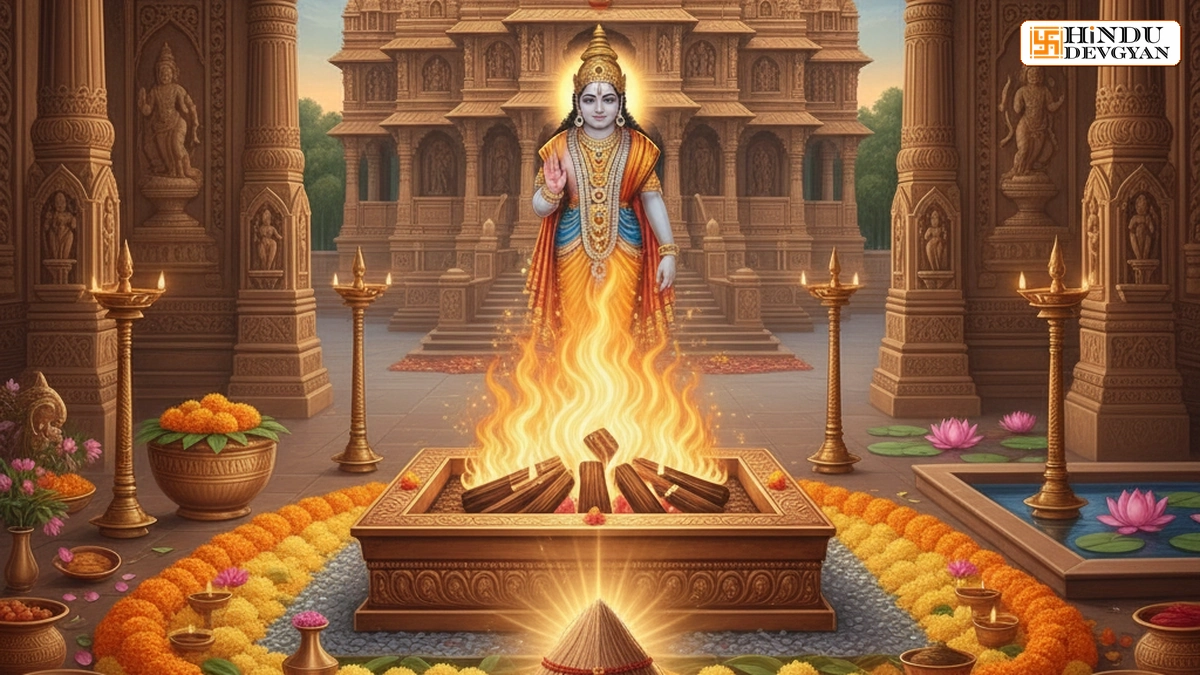
As the aroma of sacred wood and ghee fills the air, and the purifying flames of the Havan kund dance, every devotee seeks to offer their purest intentions to the Divine. The Navami Havan, especially, is a powerful crescendo of devotion, marking the culmination of days of spiritual practice and invoking immense blessings. But as the Purnahuti—the final, most significant offering—approaches, a crucial question arises: *Why is the coconut so indispensable, and does its absence truly render your profound efforts incomplete?*
Today, Tuesday, 20 October 2026, we look towards the upcoming auspicious Navami Havan, such as the grand Chaitra Navami on Saturday, April 17, 2027. This pivotal moment in your spiritual journey demands a clear understanding of every sacred nuance. Join us as we unravel the profound symbolism of the coconut in Purnahuti, guided by ancient Vedic wisdom and the insights of revered scholars.
Significance & Vedic Shastric Context
The Havan, or Yajna, is one of the most ancient and potent rituals in Hinduism, a cosmic communion where offerings are made to the deities through the medium of Agni Devata, the sacred fire. It’s a purification ceremony, a means of expressing gratitude, seeking blessings, and purifying the atmosphere, both physical and subtle.
Transform Your Home’s Energy Today!
Discover the ancient secrets to attracting wealth, health, and harmony. Download our premium 5-chapter Vastu Shastra guide instantly.
At the heart of every Havan lies the Purnahuti, the final and most complete offering. This isn’t just another offering; it’s the culminating act of surrender, the ultimate expression of devotion that signifies the successful completion of the entire ritual. And it is here, in this sacred moment, that the humble coconut, revered as ‘Shriphal’ (the fruit of Lakshmi or the divine fruit), plays an unparalleled role.
The coconut, in its very structure, is a profound symbol: its hard outer shell represents the physical body and the ego (Ahamkara); the fibrous layer beneath signifies desires and attachments (Maya); the white, pure pulp inside embodies the purified soul (Atman) and absolute truth; and the pristine water within is likened to divine nectar or the bliss of spiritual realization. When you offer a whole coconut into the Havan fire during Purnahuti, you are not merely offering a fruit; you are symbolically offering your entire being – your ego, your attachments, your intellect, and your very soul – to the Divine. It’s an act of complete surrender, aspiring for the ultimate liberation and union with the Brahman.
सर्वं ब्रह्मारर्पणमस्तु।
Sarvam Brahmarpanam Astu.
Meaning: May all (my actions, my offerings, my very being) be offered to Brahman.📲 Join Our WhatsApp Channel
रोज़ सुबह पाएं — पंचांग, मंत्र, और आध्यात्मिक ज्ञान सीधे WhatsApp पर。
Get daily Panchang, Mantras & Spiritual Wisdom every morning.
This powerful affirmation encapsulates the spirit of Purnahuti – a complete and unconditional offering to the Supreme Reality. The coconut, by its very nature and symbolism, becomes the perfect vessel for this ultimate act of dedication.
Step-by-Step Vidhi, Shubh Muhurat & Planetary Influences
Performing the Purnahuti with a coconut is a precise and sacred act. While the entire Havan follows specific steps, here’s how the coconut offering typically unfolds during the Purnahuti:
- Preparation: A whole, unblemished coconut, preferably with its fibrous husk intact (though sometimes peeled), is cleaned. It symbolizes a wholesome, unfragmented offering.
- Sankalpa & Mantras: Before the offering, specific mantras are chanted, invoking the deities and affirming the purpose of the Purnahuti. The devotee holds the coconut with utmost reverence, often with both hands, along with other items like betel nut, betel leaf, and sometimes a small cloth or dakshina.
- The Offering: With intense devotion and the chanting of specific Purnahuti mantras (often concluding with ‘Swaha!’), the coconut is carefully placed into the heart of the Havan fire. The fire, Agni, consumes the offering, carrying the devotee’s prayers and surrender to the divine realm.
Upcoming Navami Havan Muhurat (Chaitra Navami 2027):
- Date: Saturday, April 17, 2027
- Auspicious Window for Havan: While the Navami Tithi extends from the evening of April 16th till the evening of April 17th, the most auspicious time for Havan on April 17, 2027, would typically be during the daytime. A general favorable period could be from 09:00 AM to 01:00 PM. For precise local timings, we always recommend consulting a reliable Panchang.
Planetary Influences: Havan is known to purify not only the physical environment but also the subtle energetic fields. The sacred smoke (Yajna Dhuma) carries medicinal properties and also balances cosmic energies. Offering during auspicious muhurats enhances these effects, aligning your intentions with benevolent planetary influences, thereby attracting positive vibrations and mitigating potential malefic effects, subtly influencing your spiritual journey and overall well-being.
Important Dos & Don’ts to Avoid Shastric Karma Errors
Ensuring your Navami Havan is spiritually fruitful requires adherence to certain principles:
- DOs:
- Pure Intention (Bhavana): The most crucial ‘Do’. Perform the Havan with a pure heart, clear intention (Sankalpa), and unwavering faith.
- Cleanliness: Maintain physical and mental purity before and during the Havan.
- Proper Vidhi: Follow the prescribed rituals and mantras as guided by a knowledgeable priest or authentic texts.
- Quality Offerings: Use fresh, pure, and prescribed ingredients, including a whole, unblemished coconut for Purnahuti.
- Surrender: Approach the ritual with a spirit of complete surrender and devotion.
- DON’Ts:
- Distraction & Haste: Avoid performing the Havan mechanically or with a distracted mind.
- Impurity: Do not use impure ingredients or approach the Havan in an unclean state.
- Ego-Centrism: The Havan is an act of offering to the Divine, not a means to fulfill personal desires with an egoistic mindset.
- Ignoring Tradition: While intent is supreme, neglecting established traditions, especially for Purnahuti, can dilute the spiritual impact.
So, does the absence of a coconut make your puja incomplete? According to shastric tradition, the coconut for Purnahuti is considered exceptionally auspicious and a symbol of completeness. Its offering is highly recommended to bring the Havan to its fullest spiritual fruition. While the pure intention (Bhavana) of the devotee is always paramount and no true act of devotion is ever wasted, performing Purnahuti *without* the consecrated coconut is considered a significant deviation from the traditional and ideal vidhi. It may leave a spiritual vacuum, a sense of not having offered the ‘best’ or the ‘most complete’ offering, potentially impacting the devotee’s feeling of spiritual satisfaction and the desired outcome. Therefore, great effort should be made to include it. In extremely rare cases of absolute unavailability, an alternative like a ripe, whole fruit (like a banana or mango) offered with profound devotion *might* be considered, but it’s not a direct substitute for the unique symbolism of the coconut. For a truly complete Navami Havan, planning for the sacred coconut is essential to avoid this subtle yet significant spiritual error.
For further insights into aligning your spiritual practices with cosmic energies and understanding your personal spiritual blueprint, you might explore resources on Vedic Wisdom.
Frequently Asked Questions
- Q1: Why is coconut specifically offered in Purnahuti, and not other fruits?
- A1: The coconut’s unique composition—hard shell, fibrous layers, pure pulp, and sacred water—symbolizes the layers of human existence from ego to pure consciousness. Offering it represents the complete surrender of one’s entire being (body, mind, and soul) to the Divine, making it the most appropriate and potent offering for the ultimate act of Purnahuti.
- Q2: What if I absolutely cannot find a coconut for my Navami Havan Purnahuti?
- A2: While the coconut is highly recommended for its unique symbolism and traditional significance, in genuinely unavoidable circumstances, some traditions suggest offering another whole, ripe, and auspicious fruit (like a mango or banana) with the same profound devotion and intent of complete surrender. However, this is considered an exception, and every effort should be made to procure a coconut.
- Q3: Is there a specific mantra to offer the coconut during Purnahuti?
- A3: Yes, during Purnahuti, after invoking various deities and making other specific offerings, the main Purnahuti mantra is chanted while offering the coconut and other prescribed items. This mantra typically includes the name of the primary deity being invoked and concludes with ‘Swaha’, signifying the offering to the fire god, Agni. Consulting a knowledgeable priest for the precise mantra is always advisable.
🔮 Curious About Your Birth Chart?
Discover your exact career path, marriage compatibility, and planetary dashas based on your exact birth time.
⭐ Recommended for You
Contains affiliate links. We earn a small commission at no extra cost to you.
Complete brass thali with diya, incense holder, bell and more for daily puja.