
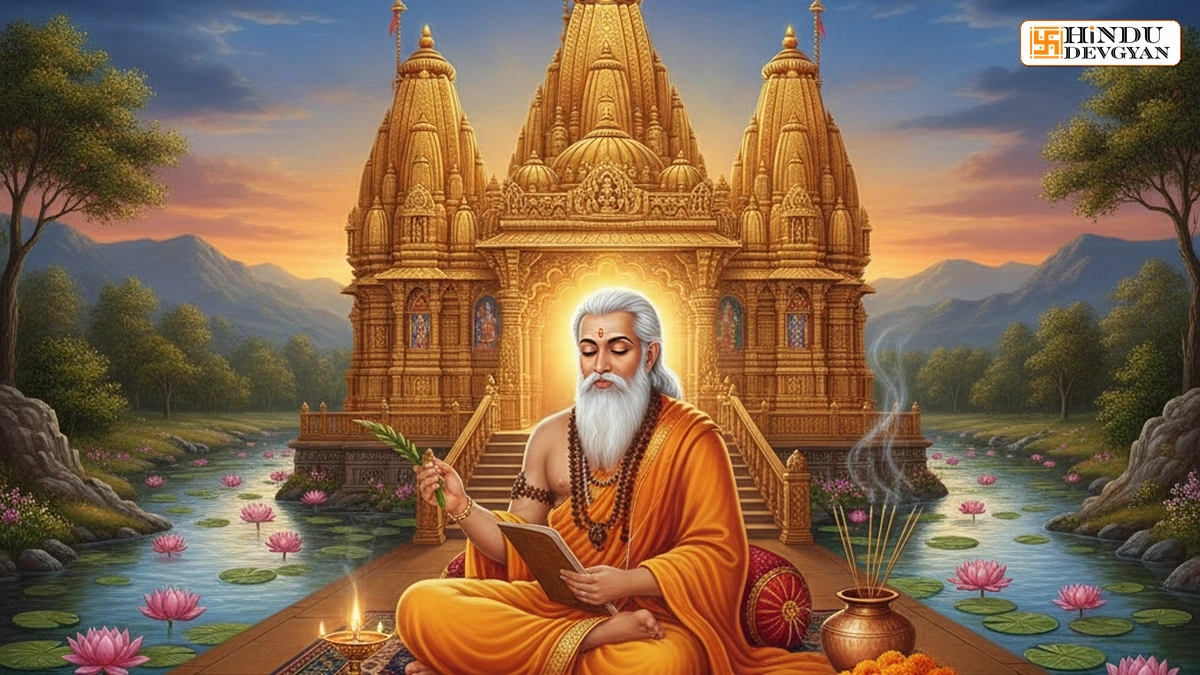
ध्यायतो विषयान्पुंसः सङ्गस्तेषूपजायते। सङ्गात्संजायते कामः कामात्क्रोधोऽभिजायते॥
“While contemplating the objects of the senses, a person develops attachment for them, and from such attachment lust develops, and from lust anger arises.”
हिंदी सारांश:
यह श्लोक बताता है कि कैसे इंद्रियों के विषयों का चिंतन करने से आसक्ति पैदा होती है, आसक्ति से कामना जन्म लेती है, और कामना पूरी न होने पर क्रोध उत्पन्न होता है। यह जीवन में अशांति के मूल कारण को समझाता है, जो आधुनिक जीवन में भी उतना ही प्रासंगिक है।
In Bhagavad Gita Chapter 2 Verse 62, Lord Krishna unveils a profound psychological sequence that governs human experience, a timeless truth as relevant today as it was millennia ago. This verse serves as a critical warning, illustrating the subtle yet powerful chain reaction that begins with mere contemplation and can culminate in profound inner turmoil.
The Chain of Attachment
Lord Krishna meticulously outlines the genesis of suffering. It begins with dhyāyato viṣayān puṁsaḥ – contemplating the objects of the senses. In our modern world, this could be endlessly scrolling through social media, coveting a new gadget, or fantasizing about a particular lifestyle. This contemplation leads to saṅgas teṣūpajāyate – attachment. We become emotionally invested in these external objects or outcomes. From this attachment, saṅgāt saṁjāyate kāmaḥ – desire is born. This isn’t just a wish; it’s a strong craving, a feeling that our happiness depends on acquiring or experiencing that object.
Transform Your Home’s Energy Today!
Discover the ancient secrets to attracting wealth, health, and harmony. Download our premium 5-chapter Vastu Shastra guide instantly.
📲 Join Our WhatsApp Channel
रोज़ सुबह पाएं — पंचांग, मंत्र, और आध्यात्मिक ज्ञान सीधे WhatsApp पर।
Get daily Panchang, Mantras & Spiritual Wisdom every morning.
Modern Manifestations of Desire
Consider the relentless pursuit of material possessions, career advancements, or even fleeting digital validation. When we constantly dwell on what we lack or what we wish to attain, we foster attachment. This attachment then morphs into insatiable desire. If that desire is thwarted, kāmāt krodho ‘bhijāyate – anger arises. This anger can manifest as frustration, resentment, or even outright rage, disrupting our peace and relationships. This ancient wisdom from the Bhagavad Gita offers a clear diagnostic tool for understanding our emotional landscape.
Cultivating Detachment in Daily Life
The solution isn’t to avoid the world, but to change our relationship with it. Practicing mindfulness helps us observe our thoughts and desires without immediately identifying with them. When we notice ourselves contemplating a sensory object, we can consciously choose not to let attachment take root. This doesn’t mean suppressing desires, but understanding their transient nature and not allowing them to dictate our inner state. It’s about performing our duties and enjoying life’s offerings without becoming enslaved by them, a core principle of Karma Yoga.
The Path to Inner Peace
By understanding this profound psychological chain, we gain the power to break free. When we reduce attachment, desires become less intense, and the sting of unfulfilled desires diminishes. This leads to a reduction in anger and frustration, paving the way for genuine inner peace and contentment. This wisdom is a cornerstone of spiritual growth, guiding us towards a more balanced and joyful existence, a path illuminated by ancient texts and explored further on platforms like HinduDevGyan.
🔮 Curious About Your Birth Chart?
Discover your exact career path, marriage compatibility, and planetary dashas based on your exact birth time.
⭐ Recommended for You
Contains affiliate links. We earn a small commission at no extra cost to you.
The world’s most widely read edition of the Gita with original Sanskrit, transliteration, and commentary.