हिंदी सारांश:
- खरगोन का शिव डोला महोत्सव एक ऐतिहासिक वार्षिक उत्सव है जहाँ बाबा सिद्धनाथ की शाही पालकी निकलती है।
- यह लेख डोला महोत्सव 2026 (भविष्य की तारीखें) के लिए पूर्ण यात्रा गाइड, पूजन विधि और आवश्यक नियमों की जानकारी प्रदान करता है।
- देवताओं के आशीर्वाद के लिए पालकी यात्रा के दौरान सम्मान और नियमों का पालन करना महत्वपूर्ण है।
Namaste, spiritual seekers and fellow travelers on the path of devotion! From the vibrant heartland of Madhya Pradesh, we bring you an exclusive insight into one of India’s most captivating spiritual spectacles: the Shiv Dola Mahotsav of Khargone. While today marks Monday, August 31, 2026, and the air is thick with anticipation for upcoming festivals, we turn our gaze to the revered Baba Siddhanath Mandir, preparing you for an experience that transcends mere sightseeing – a profound journey into devotion.
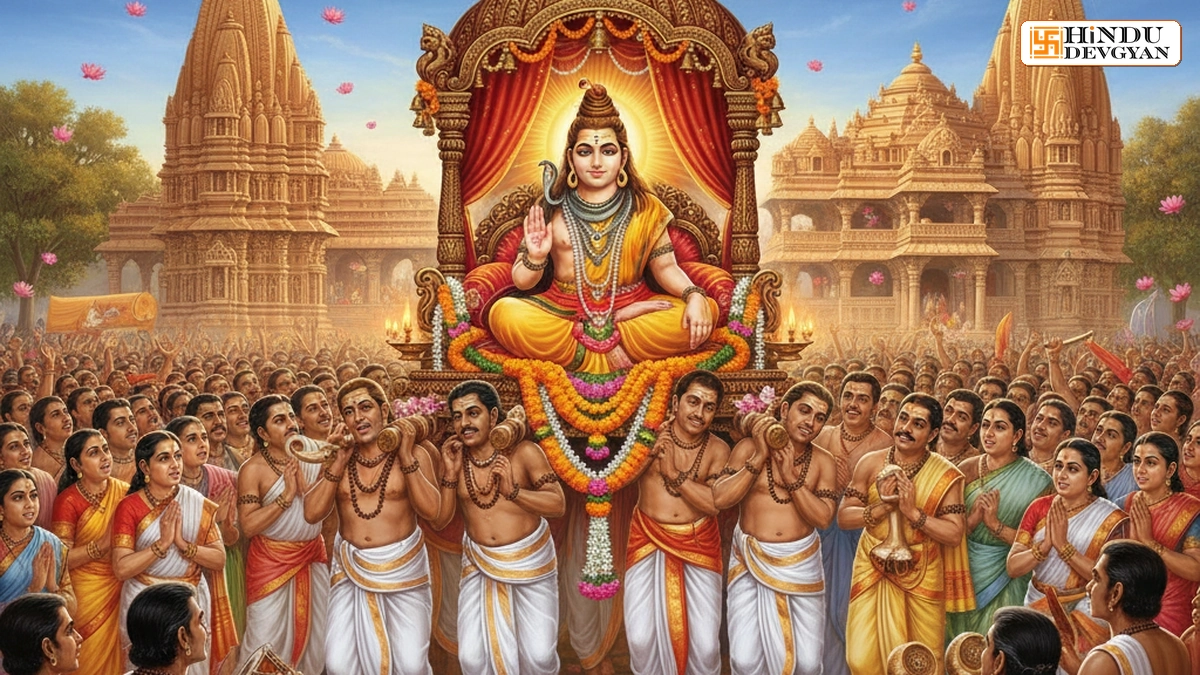
The annual Shiv Dola Mahotsav in Khargone isn’t just a procession; it’s a living canvas of faith, a rhythmic chant of ‘Har Har Mahadev’ echoing through centuries. Every year, devotees eagerly await the moment when Baba Siddhanath, the presiding deity, embarks on a grand royal palanquin (Shahi Palki) through the city, showering blessings upon a sea of humanity. This isn’t just news; it’s a call to connect with the divine.
Spiritual Significance & Sacred Legends of Baba Siddhanath
The Baba Siddhanath Mandir in Khargone stands as a beacon of Shiva’s eternal presence. Legend has it that the Shivling enshrined here is swayambhu (self-manifested), radiating an unparalleled spiritual energy that draws countless devotees. This ancient shrine is deeply intertwined with the region’s spiritual heritage, believed to fulfill sincere prayers and bestow prosperity.
Transform Your Home’s Energy Today!
Discover the ancient secrets to attracting wealth, health, and harmony. Download our premium 5-chapter Vastu Shastra guide instantly.
The Shiv Dola Mahotsav, specifically, symbolizes Lord Shiva’s journey (Nagar Bhraman) to bless his devotees across the town. It’s a re-enactment of the divine compassion, where the Lord himself steps out of his abode to meet his children, to wipe away their sorrows, and to imbue their lives with peace and devotion. Participating in this procession is considered highly meritorious, granting devotees immense spiritual benefits and liberation from karmic burdens.
ॐ नमः शिवाय शुद्धाय सच्चिदानन्द रूपिणे।
परमार्थैक लाभाय नमो नमः॥
Om Namah Shivaya Shuddhaya Sachchidananda Rūpiṇe.
Paramārthaika Lābhāya Namo Namah.Meaning: I bow to Lord Shiva, who is pure, the embodiment of truth, consciousness, and bliss. I bow again and again to Him, who is the sole bestower of the highest spiritual gain.
Shiv Dola Mahotsav: Auspicious Muhurat & Grand Vidhi
While the exact dates for the 2026/2027 Shiv Dola Mahotsav are eagerly awaited and announced closer to the event (typically falling during the auspicious Shravan or Bhadrapada months), understanding the annual traditions and performing Shiva Puja on auspicious days is paramount.
For those seeking to connect with Lord Shiva’s energy today, Monday, August 31, 2026, is a powerful day for devotion, as Mondays are intrinsically linked to Mahadev. The Pradosh Kaal (evening twilight) is exceptionally sacred for Shiva worship. On August 31, 2026, the Pradosh Muhurat for Shiva Puja begins approximately around 06:45 PM and concludes at 09:00 PM (local Khargone time). Offering Bel Patra, milk, and water during this time is highly recommended.
The Grand Vidhi (Ritual) of Shiv Dola:
- Preparation: Days leading up to the Dola, the deity’s idol is meticulously adorned with new clothes, precious jewelry, and fresh flowers. The Shahi Palki itself is an artistic marvel, decorated with silks, marigolds, and bells.
- Mangal Aarti: The Mahotsav commences with an elaborate Mangal Aarti at Baba Siddhanath Mandir, invoking divine blessings.
- Procession Start: The idol is reverently placed in the palanquin, and amidst the chanting of Vedic hymns, conch blowing, and the rhythmic beat of drums, the procession begins its journey.
- Nagar Bhraman: The Dola traverses fixed routes, making brief halts at various points where devotees offer prayers, perform Aarti, and seek blessings. The atmosphere is charged with devotion, with Bhajan mandalis, traditional dance groups, and thousands of devotees participating.
- Return & Aarti: The procession culminates back at the temple, followed by a grand evening Aarti, signifying the Lord’s return to his abode after blessing his devotees.
The 1 Sacred Mistake to Avoid: Disrespectful Conduct During the Dola
The most critical mistake to avoid during such sacred processions is any form of irreverence or disorderly conduct. Remember, this is a divine journey of the Lord. Maintain utmost respect, avoid pushing or jostling, do not engage in activities that disrupt the spiritual atmosphere (like excessive photography that obstructs views or being engrossed in mobile phones), and ensure your actions reflect the sanctity of the event. Participate with a humble heart and devotion, focusing on the divine presence rather than personal convenience or spectacle.
📲 Join Our WhatsApp Channel
रोज़ सुबह पाएं — पंचांग, मंत्र, और आध्यात्मिक ज्ञान सीधे WhatsApp पर。
Get daily Panchang, Mantras & Spiritual Wisdom every morning.
Darshan Timings, VIP Pass & Aarti Schedule 2026
The Baba Siddhanath Mandir welcomes devotees daily. While specific Shiv Dola Mahotsav timings vary annually, here are the general darshan and aarti timings for the temple:
- Morning Darshan: 06:00 AM – 12:00 PM
- Afternoon Break: 12:00 PM – 04:00 PM (Temple remains closed)
- Evening Darshan: 04:00 PM – 09:00 PM
- Morning Aarti: 06:30 AM
- Evening Aarti: 07:30 PM
Currently, there are no specific ‘VIP Pass’ systems for regular darshan, as the temple aims for universal access. During the Shiv Dola Mahotsav, entry to the main sanctum might be restricted for brief periods during key rituals, but participation in the procession is open to all. Always check the official HinduDevGyan portal for real-time updates and special announcements closer to the festival.
How to Reach Khargone & Shiv Mandir
Khargone is well-connected and accessible:
- Nearest Airport: Devi Ahilya Bai Holkar Airport, Indore (IDR), approximately 150 km away. From Indore, you can hire a taxi or take a bus to Khargone.
- Nearest Railway Station: Khandwa Junction (KNW), about 90 km away, or Indore Junction (INDB). Regular trains connect these to major Indian cities. From Khandwa or Indore, taxis and local buses are readily available.
- By Road: Khargone has excellent road connectivity via state and national highways. Regular bus services operate from major cities like Indore, Bhopal, Ujjain, and Mumbai.
Once in Khargone, the Baba Siddhanath Mandir is centrally located. Auto-rickshaws, cycle-rickshaws, and local taxis are the most convenient modes of transport to reach the temple.
Best Hotels, Dharamshalas & Stay Options Near Baba Siddhanath Mandir
Khargone offers a range of accommodation options to suit every budget:
- Budget Dharamshalas: Several local dharamshalas near the temple provide clean, basic accommodation at very affordable rates, ideal for pilgrims. Enquire locally upon arrival.
- Comfortable Family Stays:
- Hotel Kanhaiya Palace: Mid-range, good amenities.
- Hotel Siddhanath: Closer to the temple, offering decent comfort.
- Hotel Amaltas International: Known for hospitality and convenience.
Booking in advance, especially during the Shiv Dola Mahotsav, is highly recommended.
Famous Local Prasad & Authentic Sattvic Food to Try
After your spiritual journey, treat your palate to the local flavors:
- Temple Prasad: Devotees often bring modak, coconuts, and sweet offerings. Inside the temple premises, you might receive small packets of mishri (rock sugar) as Prasad.
- Local Delicacies: Explore Khargone’s street food, which includes delightful chaats, jalebis, and poha. For authentic Sattvic food, look for small eateries around the temple that specialize in traditional vegetarian thalis.
- Specialty: Don’t miss trying local sweets made from fresh milk.
Complete 1-2 Day Itinerary & Nearby Sacred Places to Visit
Day 1: Khargone Devotion
- Morning: Arrive in Khargone, check into your accommodation. Proceed to Baba Siddhanath Mandir for Darshan and Morning Aarti.
- Late Morning: Explore the temple complex, learn about its history.
- Lunch: Enjoy a traditional Sattvic thali.
- Afternoon: Visit the Navgraha Mandir, another significant temple in Khargone dedicated to the nine celestial bodies. Understanding your Kundli and planetary positions is often related to these deities.
- Evening: Attend the Evening Aarti at Baba Siddhanath Mandir. Stroll through the local markets.
Day 2: Exploring Nearby Gems
- Morning: Depart for Maheshwar (approx. 60 km), a historic town on the banks of the Narmada River.
- Attractions in Maheshwar: Visit the majestic Maheshwar Fort, the beautiful Ahilya Bai Ghats, and take a boat ride on the sacred Narmada. The temples here are architectural marvels.
- Lunch: Savor traditional Malwa cuisine in Maheshwar.
- Afternoon: Optionally, visit Mandu (approx. 90 km from Khargone), an ancient city known for its stunning Afghan architecture and romantic legends.
- Evening: Return to Khargone or depart from Maheshwar/Indore.
Consider consulting a Panchang for auspicious timings if you plan specific pujas or rituals.
Inner Sanctum Rules, Dress Code & Dos and Don’ts
- Dress Code: Modest traditional attire is highly recommended. Men usually wear shirts and trousers/dhoti, while women prefer sarees or salwar-kameez. Avoid revealing clothing.
- Footwear: Footwear must be removed before entering the temple premises. Locker facilities are often available near the entrance.
- Mobile Phones: Use of mobile phones inside the sanctum sanctorum is usually prohibited. Keep them on silent or in your bag to maintain sanctity.
- Offerings: Flowers, coconuts, milk, and Bel Patra are common offerings. Purchase them from designated vendors outside the temple.
- Dos: Maintain silence, follow queue systems, respect temple staff and fellow devotees, and keep the premises clean.
- Don’ts: Do not carry leather items into the inner sanctum, avoid loud conversations, refrain from touching idols without permission, and do not consume non-vegetarian food or alcohol before visiting. For deeper spiritual insights into actions and their consequences, explore Gita Wisdom on Karma.
Frequently Asked Questions
Q1: What is the significance of Shiv Dola Mahotsav?
A1: Shiv Dola Mahotsav is an annual festival where Lord Shiva (Baba Siddhanath) takes a royal procession through Khargone, blessing devotees and symbolizing his divine presence among the people.
Q2: When will Shiv Dola Mahotsav 2026 take place?
A2: While the general period for Shiv Dola is around Shravan or Bhadrapada months, the exact dates for the 2026/2027 Mahotsav are announced closer to the event by the temple committee. Please check local announcements for specific timings.
Q3: Are there any specific rituals to follow during the Dola procession?
A3: Devotees typically walk alongside the palanquin, chant ‘Har Har Mahadev,’ offer flowers, and seek blessings. Maintaining a devotional demeanor and avoiding disruptions are key aspects of participation. You can also explore Vastu tips for enhancing spiritual energy in your home before embarking on such pilgrimages.
🔮 Curious About Your Birth Chart?
Discover your exact career path, marriage compatibility, and planetary dashas based on your exact birth time.
⭐ Recommended for You
Contains affiliate links. We earn a small commission at no extra cost to you.
Pure Nepali Rudraksha. Enhances focus and brings Lord Shiva’s blessings.