
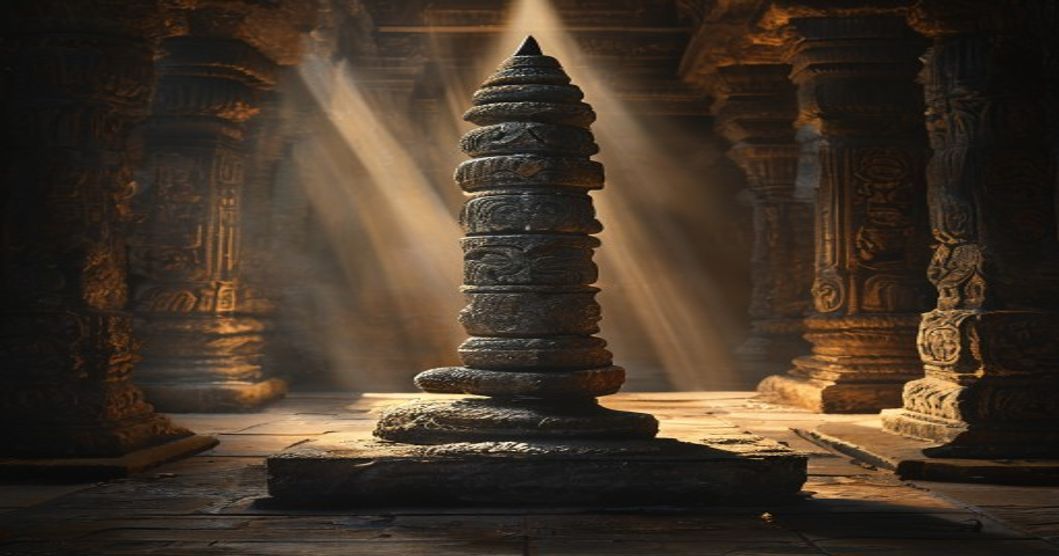
India is a land where science and spirituality do not merely coexist; they are beautifully woven into the very fabric of our ancient structures. Deep within the heart of Telangana lies a profound testament to this sacred synthesis—the Chhaya Someswara Temple. Located in Panagal, Nalgonda district, this 1400-year-old architectural marvel continues to baffle modern scientists, engineers, and spiritual seekers alike.
The defining mystery of this temple is an eternal, motionless shadow (Chhaya) that falls directly upon the central Shiva Lingam from sunrise to sunset. While the sun moves across the sky, this shadow remains completely static, cloaking the deity in a permanent embrace of darkness. For centuries, devotees have associated this phenomenon with the cosmic play of Rahu-Ketu, the Sun, and the Moon. Today, we dive deep into the spiritual, astrological, and scientific secrets of this miraculous temple.
The Phenomenon of the Unmoving Shadow
In most temples, shadows shift as the day progresses. However, at the Chhaya Someswara Temple, the shadow shaped like a single pillar remains absolutely constant on the Shiva Lingam throughout the day.
According to local folklore and Vedic tradition, this shadow represents the mystical presence of Rahu and Ketu, the shadow planets. It is believed that the shadow symbolizes the cosmic balance between light (Surya/Sun) and darkness (Rahu/Ketu), reminding devotees of the eternal presence of Lord Shiva, who exists beyond the dualities of time and space.
Vedic Architecture, Vastu, and Cosmic Alignments
While the spiritual explanation inspires deep devotion, the physical explanation reveals the mind-boggling scientific advancement of ancient India. The temple, built during the reign of the Chola and Kakatiya dynasties, is a masterclass in physics and temple architecture.
The architects utilized the principles of light reflection and scattering. The shadow cast on the Lingam is not actually the shadow of a single pillar, but a unified reflection created by multiple pillars positioned in the temple’s Ardha Mandapa (half-hall). The pillars were carved and positioned with such mathematical precision that they catch the light entering the temple and focus it to create a constant shadow, regardless of the sun’s position.
This level of planning shows that ancient temple builders did not construct holy sites randomly. They meticulously applied the principles of Vastu and cosmic geometry to ensure that the temples acted as energy vortexes, aligned perfectly with celestial movements calculated through the Panchang.
Astrological Significance: Mitigating Rahu-Ketu Dosha
In Vedic astrology, Rahu and Ketu are known as karmic planets that can bring sudden transformations, obstacles, or spiritual awakening. Because of the unique shadow play at Chhaya Someswara, the temple holds immense astrological significance.
- Rahu-Ketu Pooja: Devotees flock to this temple to perform special prayers to pacify the malefic effects of shadow planets in their birth chart.
- Sani Dosha Relief: Worshipping Lord Someswara (Shiva) here is believed to alleviate the hardships caused by Saturn (Shani) and Rahu transit periods.
- Inner Peace: Sitting in the quiet sanctum helps calm an agitated mind, which is often a symptom of an imbalanced moon or Rahu in one’s horoscope.
The Spiritual Philosophy of Light and Shadow
Beyond the architectural genius and astrological remedies, the Chhaya Someswara Temple offers a profound spiritual lesson. In the sacred teachings of the Bhagavad Gita, Lord Krishna speaks extensively about the nature of illusion (Maya) and the ultimate truth.
The shadow falling on the Shiva Lingam is a physical representation of Maya—the temporary, shifting illusions of the material world. The Lingam itself represents the ultimate reality (Brahman), which remains unaffected by the shadow of worldly illusion and the cycle of Karma. By meditating upon this divine form, a devotee learns to look past the shadows of life and connect with the eternal light within.
How to Visit Chhaya Someswara Temple
If you are planning a spiritual pilgrimage to experience this divine mystery firsthand, here are the essential details:
- Location: Panagal Village, Nalgonda District, Telangana, India (approximately 100 km from Hyderabad).
- Deity: Lord Shiva (Someswara Swamy).
- Best Time to Visit: During Mahashivratri and Kartik Masam, when the temple is beautifully illuminated and special Vedic rituals are performed.
The Chhaya Someswara Temple stands as an eternal reminder that our ancestors possessed a deep, scientific understanding of the universe, perfectly blended with spiritual wisdom. To explore more about sacred Indian temples, Vedic wisdom, and daily spiritual practices, visit us at HinduDevGyan.