
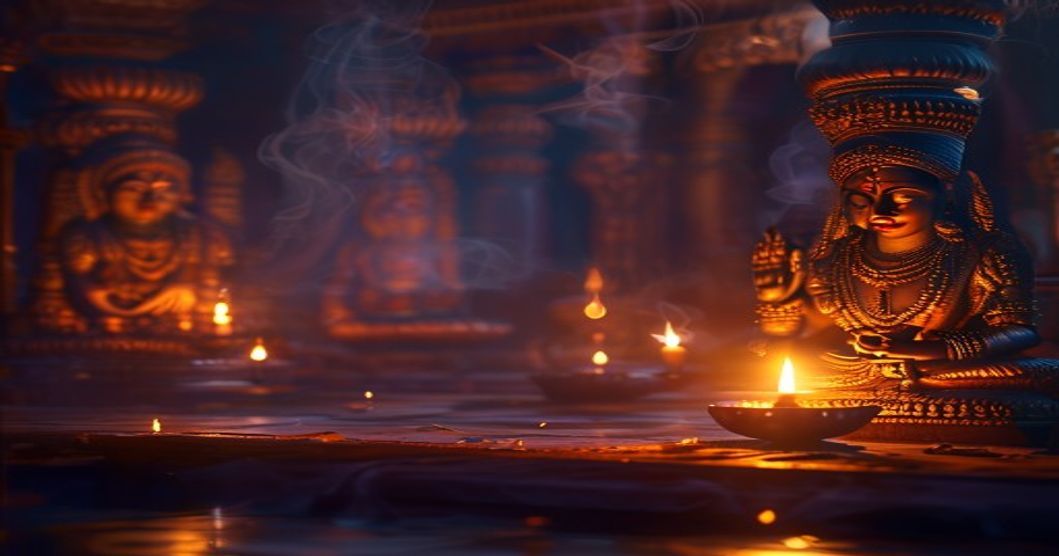
In Sanatan Dharma, daily worship or Puja is not merely a ritual; it is a profound scientific method to align our personal energy with the cosmic vibrations of the universe. Devotees often wonder whether the divine connection can be established at any hour of the day or night. While our busy modern lifestyles often push our spiritual practices into the late hours of the evening, classical Hindu scriptures lay down very specific guidelines regarding night worship.
Is it spiritually beneficial to perform puja at night, or does it invite negative energies? To understand this, we must delve deep into the Vedic concept of time, cosmic energies, and scriptural injunctions. For those seeking to align their daily lives with these ancient spiritual practices, exploring resources on Hindu Dev Gyan can help devotees grasp the subtle energies associated with different times of the day.
The Vedic Conception of Time: The Eight Praharas
According to Vedic astrology and scripture, a 24-hour day is divided into eight Praharas (four during the day and four at night), each lasting approximately three hours. The energies of the cosmos shift dramatically during these periods.
The early morning hours, specifically the Brahma Muhurta (approx. 3:30 AM to 5:00 AM), are dominated by Sattva Guna (purity and light). This is considered the ultimate time for meditation, prayer, and connection with the deities. As the sun sets, the earth transitions into Tamasic and Rajasic energy phases. Consequently, the rules for worship change significantly after twilight.
What Do the Shastras Say About Nighttime Puja?
In general, traditional Hindu scriptures discourage the performance of standard household deity worship after sunset. Here is the spiritual reasoning behind this rule:
- The Sleep of the Deities (Shayan): Scriptures state that after sunset, the deities enter a state of rest (Shayan). Just as humans require sleep, the energies manifested in consecrated idols also require a period of rest. Hence, the doors or curtains of home temples (Patal) are closed after the evening Sandhya Aarti.
- Decline of Sattvic Energy: After sunset, the atmospheric energy becomes increasingly Tamasic (dormant/dark). Rituals performed without strict scriptural guidance during this time can sometimes attract undesirable subtle energies.
- The Rule of the Bell: Rings of bells and blowing of conch shells (Shankh), which are essential during morning prayers to awaken divine energies, are strictly forbidden at night as they can disturb the resting deities and surrounding nature.
The Exceptions: Deities and Vrats Worshipped at Night
While general household puja is paused at night, Hindu scriptures designate the nighttime—especially the period known as Nishita Kaal (around midnight)—as highly auspicious for specific deities and spiritual practices. The night holds immense power for esoteric and intense spiritual transformation.
The deities associated with the night, destruction of ignorance, and deep transformation are actively worshipped after sunset. These include Lord Shiva, Goddess Kali, Goddess Durga, and Lord Bhairava.
Major Festivals and Auspicious Night Pujas
There are several occasions where night worship is not only permitted but is considered highly meritorious:
- Maha Shivratri: Worshipping Lord Shiva during the four Praharas of the night is believed to absolve a devotee of all past karmas.
- Janmashtami: Since Lord Krishna manifested at midnight, his primary puja, abhishek, and celebrations are performed during the late-night hours.
- Diwali Laxmi Puja: The worship of Goddess Laxmi is conducted during the Pradosh Kaal and Nishita Kaal to invite prosperity into the household.
- Navratri: The night is considered highly potent for chanting the Durga Saptashati and performing sadhana dedicated to the nine forms of Shakti.
Essential Rules to Follow if You Must Pray at Night
If your daily schedule only permits you to sit for prayer late at night, you must adhere to the following scriptural rules to ensure your practice remains spiritually safe and beneficial:
- Do Not Disturb the Idols: If you are praying past 8:00 PM, do not touch, bathe, or offer fresh food (bhog) to the main deities of your home temple if they have already been put to rest (by drawing the temple curtain).
- Focus on Chanting (Japa): Night is the best time for mental chanting. Sit quietly on an asan and chant your Guru Mantra or names of your Ishta Devata using a Tulsi or Rudraksha mala.
- Light a Single Diya: You may light a small ghee or oil lamp to maintain a positive, warm energy field around you, but avoid bright, harsh lights in the temple area.
- Maintain Silence: Avoid loud chanting, ringing bells, or blowing the conch shell. Your night sadhana should be silent, meditative, and deeply personal.
By understanding and respecting these boundaries set by the Dharma Shastras, you can ensure that your spiritual practices yield the highest positive energy, bringing peace, prosperity, and spiritual evolution to your life.


