हिंदी सारांश:
- नवदुर्गा केवल मूर्तियों में नहीं, बल्कि प्रकृति की नौ औषधीय वनस्पतियों में भी निवास करती हैं।
- यह लेख इन नौ दिव्य जड़ी-बूटियों (हरड़, ब्राह्मी, जयंती, कुष्मांड, अलसी, मौलश्री, नागकेसर, सफेद मूसली और शतावरी) और उनके स्वास्थ्य लाभों का रहस्य उजागर करता है।
- नवरात्रि 2027 के शुभ मुहूर्त और पूजा विधि से इन औषधियों के माध्यम से देवी के आशीर्वाद और आरोग्य प्राप्त करने का तरीका जानें।
As a seasoned Hindu Religious Scholar and spiritual explorer, I’ve often witnessed the profound connection between divinity and the natural world. But what if I told you that the nine forms of Maa Durga, the revered Navdurga, don’t just reside in celestial realms or beautifully crafted idols? What if their divine essence permeates the very earth, manifesting as powerful healing herbs that have blessed humanity for millennia?
Today, on this auspicious Saturday, October 17, 2026, let’s embark on an extraordinary journey to unravel an untold secret of Navratri – the sacred bond between Maa Durga and 9 potent medicinal plants. This revelation, deeply rooted in ancient Vedic wisdom, transforms your Navratri observance into a holistic path for spiritual growth and unparalleled health.
Significance & Vedic Shastric Context
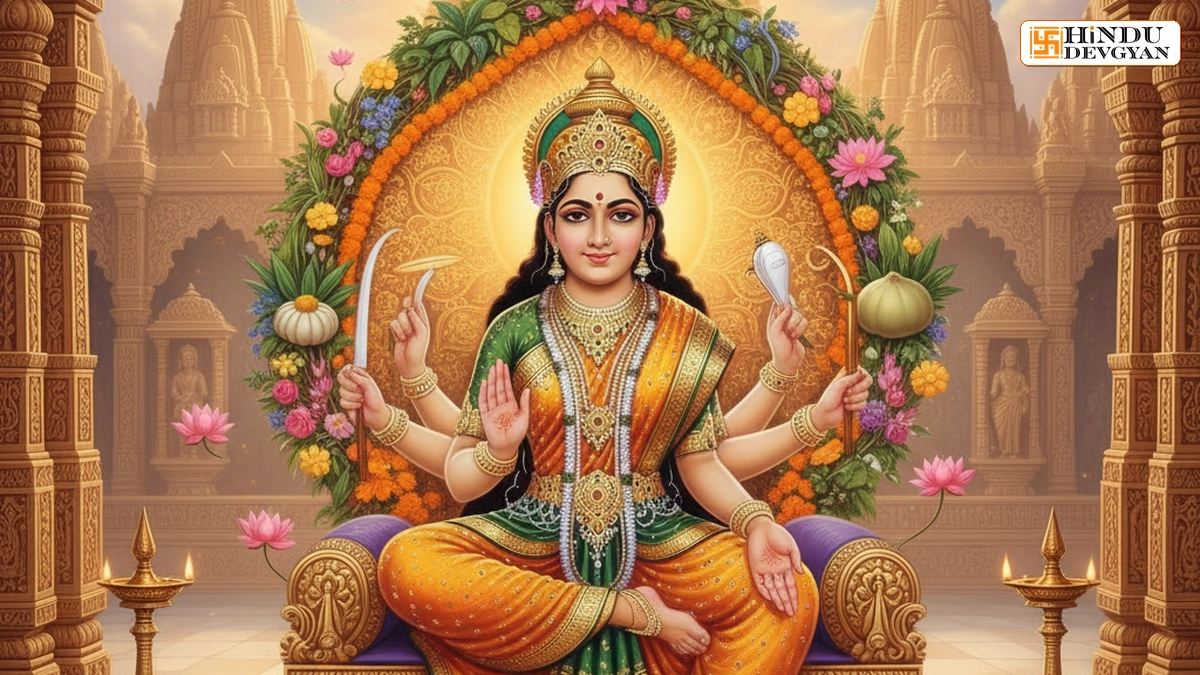
The very fabric of Sanatana Dharma is interwoven with reverence for nature. Our ancestors understood that the divine is not separate from creation; it is creation. The concept of Navdurga embodying nine distinct energies is celebrated during the auspicious period of Navratri, a time dedicated to invoking her blessings for strength, wisdom, and well-being. But beyond the traditional prayers and rituals, there lies a profound, less-known truth: each form of Maa Durga is intrinsically linked to a specific medicinal plant, known as an Oushadhi.
Transform Your Home’s Energy Today!
Discover the ancient secrets to attracting wealth, health, and harmony. Download our premium 5-chapter Vastu Shastra guide instantly.
These aren’t mere coincidences. The ancient texts, particularly those dealing with Ayurveda and folk traditions, hint at this symbiosis. Just as each aspect of Durga represents a unique cosmic power, so too does each associated herb carry distinct healing properties, mirroring the Devi’s protective and nurturing attributes. By recognizing and honoring these divine botanical manifestations, we access a deeper layer of Navratri’s healing potential, transforming our homes and bodies into temples of health and devotion.
Here are the nine sacred plants, embodying the nine forms of Navdurga:
- Maa Shailputri (हरड़ – Haritaki): Known as the ‘King of Medicines’ in Ayurveda, Haritaki (Terminalia chebula) represents the steadfastness and purity of Shailputri. It’s revered for its digestive, detoxifying, and rejuvenating properties, promoting overall well-being.
- Maa Brahmacharini (ब्राह्मी – Brahmi): Associated with the austere and knowledgeable Brahmacharini, Brahmi (Bacopa monnieri) is a revered herb for cognitive enhancement, stress reduction, and nervous system support. It embodies wisdom and mental clarity.
- Maa Chandraghanta (जयंती – Jayanti): The herb Jayanti (Sesbania sesban) is linked to Chandraghanta, symbolizing growth, protection, and auspiciousness. Traditionally used for its anti-inflammatory and wound-healing properties, it signifies victory over ailments.
- Maa Kushmanda (कुष्मांड – Kushmanda): While a fruit, Ash Gourd (Benincasa hispida), also known as Kushmanda, is deeply valued for its cooling, detoxifying, and energizing benefits. It resonates with Maa Kushmanda’s ability to create the cosmos from her gentle smile, signifying life-giving energy.
- Maa Skandamata (अलसी – Alsi): Representing the motherly love of Skandamata, Alsi (Linum usitatissimum or Flaxseed) is a powerhouse of essential nutrients, known for its heart-protective, digestive, and hormonal balancing properties. It embodies nourishment and protection.
- Maa Katyayani (मौलश्री – Maulsari): Maulsari (Mimusops elengi), or Bakul, is associated with Katyayani, symbolizing strength, beauty, and protection. Its bark and flowers have been traditionally used for their astringent and antiseptic qualities, promoting oral health and healing.
- Maa Kalaratri (नागकेसर – Nagkesar): Nagkesar (Mesua ferrea) is linked to the fierce yet benevolent Kalaratri. Known for its anti-inflammatory and digestive properties, it symbolizes the eradication of disease and negative forces, bringing purity and courage.
- Maa Mahagauri (सफेद मूसली – Safed Musli): This potent herb (Chlorophytum borivilianum) aligns with Mahagauri’s radiant purity and strength. Safed Musli is an acclaimed aphrodisiac and adaptogen, enhancing vitality and immunity, embodying renewal and vigor.
- Maa Siddhidatri (शतावरी – Shatavari): The herb Shatavari (Asparagus racemosus) is synonymous with Siddhidatri, the bestower of all Siddhis. Known as the ‘Queen of Herbs’ for female reproductive health and overall vitality, it symbolizes divine fulfillment and unwavering strength.
सर्वमंगल मांगल्ये शिवे सर्वार्थ साधिके। शरण्ये त्र्यंबके गौरि नारायणि नमोऽस्तुते॥
Sarva Mangala Mangalye Shive Sarvartha Sadhike.
Sharanye Tryambake Gauri Narayani Namostute.Word-by-Word Meaning:
Sarva Mangala: Of all auspiciousness
Mangalye: O auspicious one
Shive: O Shivaa (the consort of Shiva, embodying good)
Sarvartha: Of all objectives/purposes
Sadhike: The accomplishers
Sharanye: O refuge
Tryambake: O three-eyed one
Gauri: O Gauri (the fair one)
Narayani: O Narayani (the power of Narayana)
Namostute: Salutations to youMeaning: Salutations to you, O Narayani, who is the auspiciousness of all auspiciousness, the benefactress of all desires, the refuge, the three-eyed one, and Gauri.
📲 Join Our WhatsApp Channel
रोज़ सुबह पाएं — पंचांग, मंत्र, और आध्यात्मिक ज्ञान सीधे WhatsApp पर。
Get daily Panchang, Mantras & Spiritual Wisdom every morning.
This powerful Devi Mantra reminds us that Maa Durga is the source of all well-being and fulfillment, a truth beautifully reflected in these life-giving herbs.
Step-by-Step Vidhi, Shubh Muhurat & Planetary Influences for Navratri 2027
Incorporating the blessings of these Navdurga-Oushadhi into your Navratri 2027 observances can amplify your devotion and bring holistic healing. The upcoming Sharad Navratri 2027 offers a potent window for these practices.
Sharad Navratri 2027 Key Dates & Muhurats (Tentative, refer to local Panchang):
- Ghatasthapana (Day 1 – Maa Shailputri): Saturday, October 2, 2027
- Shubh Muhurat for Ghatasthapana: 06:18 AM to 07:45 AM (Duration: 1 Hr 27 Mins)
- Pratipada Tithi Begins: October 1, 2027 at 11:30 PM
- Pratipada Tithi Ends: October 2, 2027 at 08:30 PM
- Navami (Day 9 – Maa Siddhidatri): Sunday, October 10, 2027
- Vijayadashami (Dussehra): Monday, October 11, 2027
(Note: Specific tithi timings and muhurats can vary slightly based on regional panchang and astronomical calculations. Always consult a local HinduDevGyan Panchang for precise timings.)
Vidhi for Invoking Navdurga’s Medicinal Blessings:
- Preparation (Before Navratri): Source authentic, high-quality forms of these nine herbs. Many are available as dried herbs, powders, or supplements.
- Ghatasthapana: During the sacred Ghatasthapana ritual on Day 1, place small packets or a mixture of these herbs near your Kalash or within the earthen pot where barley seeds are sown. This symbolically invokes their healing energy into your puja space.
- Daily Offerings: Each day, as you worship the specific form of Navdurga, offer a small portion of her associated herb at her feet. If possible, light incense sticks made from these herbs, or diffuse their essential oils (if available) to purify the atmosphere.
- Mantra & Sankalpa: While chanting the daily Navdurga mantras, hold the associated herb in your hand. Make a conscious Sankalpa (resolve) for specific health, mental clarity, or protective blessings you seek, visualizing the Devi’s energy permeating the plant.
- Consumption (Under Guidance): If you plan to consume these herbs for their medicinal benefits, do so strictly under the guidance of a qualified Ayurvedic practitioner. Many of these are potent and require proper dosage. You can also make a simple decoction or herbal tea from suitable herbs and consume it as ‘prasad’ after offering to the Devi.
- Planetary Influences: Navratri is a period of heightened cosmic energy. The Moon, representing the mind and emotions, along with Venus, signifying prosperity and well-being, are particularly strong. Tapping into these energies through sincere devotion and the blessings of these herbs can balance your Kundli and bring profound healing.
Important Dos & Don’ts to Avoid Shastric Karma Errors
To truly honor the divine and benefit from these sacred practices, mindful observance is paramount. **The 1 Mistake to Avoid** is treating these divine plants merely as medicines without reverence for their spiritual essence. They are not just chemical compounds; they are manifestations of the Devi.
Dos:
- Do Maintain Purity: Observe sattvic practices throughout Navratri. Keep your body, mind, and environment clean.
- Do Research Authenticity: Ensure the herbs you procure are genuine and of good quality.
- Do Practice with Intention: Offer the herbs with devotion, gratitude, and a clear Sankalpa (intention).
- Do Consult Experts: If you intend to consume these herbs, consult an Ayurvedic doctor for personalized advice.
- Do Donate: Offer these medicinal plants or their derived products to those in need, especially during Navratri, as an act of selfless service.
Don’ts:
- Don’t Be Disrespectful: Never treat these sacred plants casually or with disrespect.
- Don’t Self-Medicate Blindly: While powerful, incorrect usage of potent herbs can be harmful.
- Don’t Consume Tamasic Food: Avoid meat, alcohol, and other tamasic foods during Navratri, as they counteract the sattvic energy you are trying to cultivate.
- Don’t Spread Negative Energy: Maintain positive thoughts and speech throughout the period.
Frequently Asked Questions
Q1: Can I use these medicinal plants even if I don’t follow the full Navratri vrat?
A1: Absolutely. While observing the full vrat amplifies the benefits, you can still honor and connect with these plants during Navratri through prayers, offerings, and mindful consumption (under expert guidance). The devotion in your heart is what truly matters.
Q2: Where can I find authentic forms of these nine medicinal plants?
A2: You can typically find these herbs at reputable Ayurvedic stores, health food shops specializing in traditional medicines, or trusted online vendors. Always verify the source and ensure the product is organic and pure.
Q3: How does connecting with these plants enhance my spiritual journey during Navratri?
A3: By recognizing Maa Durga’s presence in these healing plants, you deepen your understanding of her omnipresence. It transforms your devotion into a holistic practice that nurtures not just your spirit, but also your physical and mental well-being, fostering a stronger connection to Mother Nature and the divine healing energies she embodies.
🔮 Curious About Your Birth Chart?
Discover your exact career path, marriage compatibility, and planetary dashas based on your exact birth time.
⭐ Recommended for You
Contains affiliate links. We earn a small commission at no extra cost to you.
Complete brass thali with diya, incense holder, bell and more for daily puja.