हिंदी सारांश:
- मासिक धर्म के दौरान राखी बांधने की परंपरा पर प्राचीन मान्यताओं और आधुनिक समझ का गहरा विश्लेषण।
- मुख्य मान्यता यह है कि शारीरिक अवस्था से अधिक मन की शुद्धता और भावना महत्वपूर्ण होती है।
- पवित्रता बनाए रखने के लिए राखी बांधने से पहले स्नान, प्रार्थना और मानसिक शुद्धता पर जोर दें।
Significance & Vedic Shastric Context
Raksha Bandhan, the sacred thread of protection, is not merely a ritual; it is a profound celebration of the eternal bond between siblings. It transcends the physical and delves into the spiritual realm, symbolizing unconditional love, unwavering support, and mutual prayers for well-being. As we approach Raksha Bandhan 2027, many seekers often ponder the appropriate conduct during menstruation, especially when it coincides with such an auspicious day. In Hindu traditions, the concept of purity (shuddhi) is multifaceted, encompassing physical, mental, and spiritual dimensions. While certain ancient texts prescribe specific observances during menstruation, particularly concerning temple entry or direct interaction with deities, the underlying philosophy consistently emphasizes that true devotion stems from a pure heart and sincere intention (bhava), rather than external physical states alone.
The Vedic perspective champions the sanctity of all life processes. Menstruation, a natural and vital biological function, has historically been viewed as a period of rest and introspection, a time when a woman’s energy is directed inwards. It’s not about impurity in a moral sense, but rather a state of ritual ‘asuddhi’ or ‘ashaucha’ which pertains to the physical body’s proximity to sacred objects or fire, as prescribed in certain Smritis. However, the overarching message for festivals like Raksha Bandhan is the sentiment behind the act.
भावो हि कारणं सर्वे शुभाशुभकर्मणाम्।
Bhāvo hi kāraṇaṁ sarve śubhāśubhakarmaṇām.
Word-by-Word Meaning:
भावो (Bhāvo): Intention, feeling, disposition
हि (hi): Indeed, certainly
कारणम् (kāraṇam): Cause, reason
सर्वे (sarve): All
शुभ (śubha): Auspicious, good
अशुभ (aśubha): Inauspicious, bad
कर्मणाम् (karmaṇām): Of actions, deeds
Overall Meaning: “Intention (Bhava) is indeed the cause of all good and bad actions.” This timeless wisdom from the scriptures highlights that the purity of one’s intent is paramount in all spiritual endeavors, including the sacred act of tying Rakhi.
Step-by-Step Vidhi, Shubh Muhurat & Planetary Influences
For Raksha Bandhan 2027, the Purnima Tithi (Full Moon phase) is generally observed with great reverence. The auspicious period to tie the Rakhi is crucial for maximizing the spiritual benefits. While specific timings may vary slightly by region, the Panchang for Raksha Bandhan 2027 indicates that the Purnima Tithi will begin on Saturday, August 7, 2027, at approximately 02:00 PM and conclude on Sunday, August 8, 2027, at approximately 11:30 AM. The most favorable period for Rakhi tying (Shubh Muhurat), avoiding the ‘Bhadra Kaal,’ is expected to be on Sunday, August 8, 2027, from 06:00 AM to 11:30 AM.
Transform Your Home’s Energy Today!
Discover the ancient secrets to attracting wealth, health, and harmony. Download our premium 5-chapter Vastu Shastra guide instantly.
If you are observing Raksha Bandhan during menstruation, here’s a compassionate and spiritually sound approach:
- Mental Purity First: Prioritize your inner devotion. Remember, your feelings of love, protection, and prayers for your brother are what truly matter.
- Morning Ritual: Take a purifying bath, even if it’s not a full ceremonial bath. Dress in clean clothes.
- Prepare the Thali: Have your Rakhi thali (with Rakhi, roli, chawal, sweets, and diya) prepared by another family member if you feel uncomfortable handling ritual items directly. Alternatively, you can prepare it yourself with a clear mind and clean hands.
- Offer Prayers: Sit in a clean, designated area. Light a diya and incense. You can offer prayers to your chosen deity (Ishta Devta) and mentally invoke blessings for your brother.
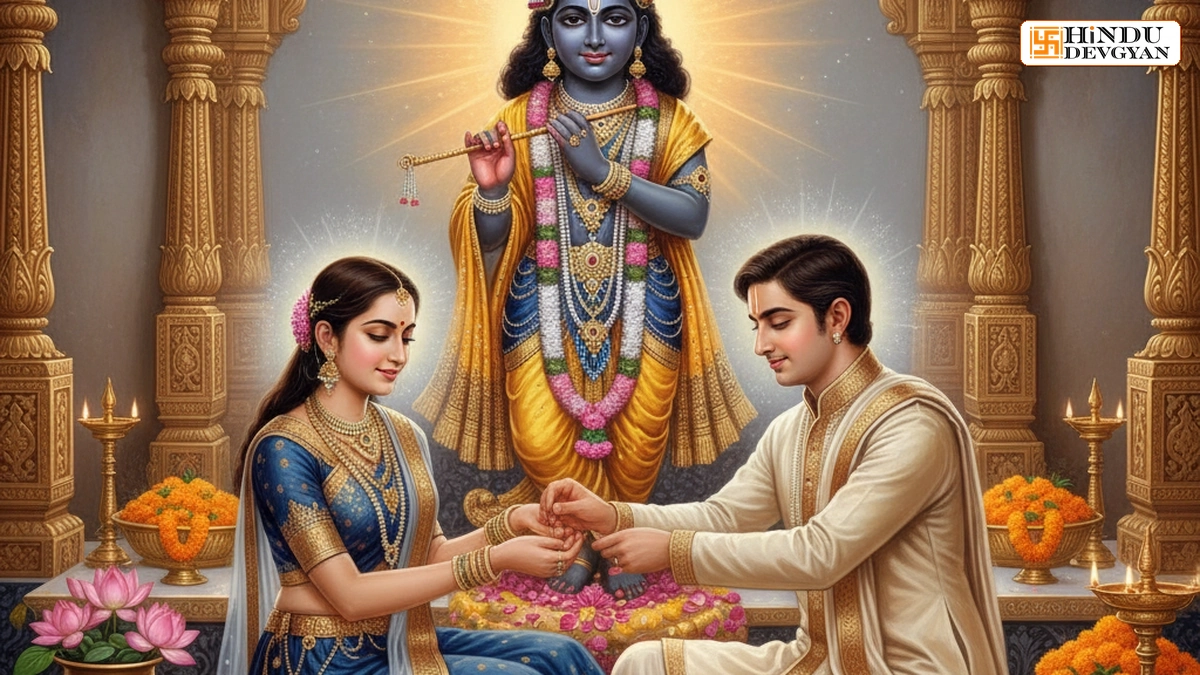
- Tying the Rakhi: With a pure heart, you can absolutely tie the Rakhi yourself. Many traditions affirm that the bond of siblings transcends ritualistic restrictions in such a personal context. If you or your family are more traditional and prefer an alternative, you can ask an elder sister, mother, or even your brother’s wife to tie the Rakhi on your behalf while you mentally participate and offer prayers. Alternatively, you can place the Rakhi at the feet of a deity and then have your brother wear it, signifying divine protection.
- Apply Tilak & Offer Sweets: You can apply Tilak with a pure intention and offer sweets. The touch is of a sister, a pure relationship.
Planetary influences for Raksha Bandhan are typically favorable during the Purnima Tithi. The Full Moon’s energy enhances spiritual receptivity and emotional bonds, making it an ideal time for such heart-felt ceremonies.
📲 Join Our WhatsApp Channel
रोज़ सुबह पाएं — पंचांग, मंत्र, और आध्यात्मिक ज्ञान सीधे WhatsApp पर。
Get daily Panchang, Mantras & Spiritual Wisdom every morning.
Important Dos & Don’ts to Avoid Shastric Karma Errors
Navigating traditions with grace and understanding is key. Here are some essential guidelines:
The 1 Mistake to Avoid: Misinterpreting Purity
The single most significant mistake is to believe that menstruation renders a woman ‘impure’ in a way that negates her spiritual essence or her ability to participate in sacred family bonds. This misunderstanding can lead to guilt, shame, and unnecessary separation. Remember, the ‘asuddhi’ associated with menstruation in some texts pertains more to ritualistic practices involving fire or direct idol touch in a temple setting, not to the sacred bond of Raksha Bandhan which is rooted in love and protection. The true ‘karma error’ would be to allow physical state to overshadow the purity of intention and the depth of sibling love.
Dos:
- Do Focus on Inner Purity: Maintain a clean mind and heart. Your devotion is paramount.
- Do Bathe and Wear Clean Clothes: A simple purifying bath and fresh clothes are always recommended before any auspicious event.
- Do Pray Mentally: Even if you feel restricted from directly handling idols or performing elaborate pujas, you can always pray with utmost sincerity from your heart.
- Do Participate in the Spirit: Be present, offer your love, and receive your brother’s blessings. The essence of Rakhi is the exchange of protection and affection.
- Do Seek Guidance: If you have specific family traditions or strong beliefs, consult your elders or a knowledgeable priest for personalized guidance, ensuring it aligns with the spirit of love and understanding.
Don’ts:
- Don’t Feel Guilty or Ashamed: Menstruation is a natural bodily process, not a sin or a mark of impurity that diminishes your spiritual worth.
- Don’t Avoid the Ritual Entirely: Find a way to participate, even if it means a modified approach, rather than abstaining completely from this beautiful celebration of sibling love.
- Don’t Force Yourself into Rituals You’re Uncomfortable With: Listen to your body and your spiritual comfort level. There are always alternative, respectful ways to participate.
- Don’t Neglect Your Well-being: This is a period traditionally for rest. Balance your participation with self-care.
Ultimately, the divine love that binds a brother and sister transcends all physical conditions. The spirit of Raksha Bandhan is eternal and pure, much like the unbreakable bond it celebrates.
Frequently Asked Questions
Q1: Is it considered inauspicious to tie Rakhi during menstruation?
A1: No, it is generally not considered inauspicious. While some traditional texts mention ritualistic purity guidelines, the spiritual essence of Raksha Bandhan emphasizes the purity of intention and the bond of love, which menstruation does not diminish. Many believe that a sister’s love and blessings are always pure, regardless of her physical state.
Q2: Can I perform a full Rakhi puja if I’m menstruating?
A2: Direct performance of an elaborate ‘puja’ involving touching idols or sacred fire might be avoided in very traditional households during menstruation. However, you can still participate by preparing the thali, offering mental prayers, applying tilak, and tying the Rakhi with a pure heart. Alternatively, you can ask another female family member to assist with parts of the puja while you observe and pray.
Q3: What if my family has strict customs regarding menstruation during festivals?
A3: It’s important to respect your family’s traditions. In such cases, you can respectfully discuss alternatives, such as having another family member tie the Rakhi on your behalf while you are present, offering mental prayers, or placing the Rakhi at a deity’s feet before your brother wears it. The goal is to celebrate the bond without causing discomfort or disrespect within your family’s customs. Remember the core message of Gita Wisdom: actions performed with pure intent are always elevated.
🔮 Curious About Your Birth Chart?
Discover your exact career path, marriage compatibility, and planetary dashas based on your exact birth time.
⭐ Recommended for You
Contains affiliate links. We earn a small commission at no extra cost to you.
Auspicious copper vessel for Puja, Kalash Sthapana and daily water offerings.